

Have We Reached the Climax of R2R DACs? What Shanling's New Vinyl Edition Reveals About the Original Recording
The Shanling EH90 challenges the myth of a 'peak' in R2R DACs and, in its physical incarnation, raises questions about fidelity, critical listening, and the relationship between digital conversion and the analog experience. What does this release say about the original sound quality and the technological background of the recording?

A Dialogue Between Vinyl and R2R
Few debates stir as much controversy in hi-fi culture as the question: have we reached the highest point possible in R2R (resistor-to-resistor) DAC technology? From a vinyl perspective, these conversations echo but rarely intersect fully. The recent release of the Shanling EH90—both as a dedicated digital-to-analog converter and in the new vinyl edition that accompanies it—offers an uncommon occasion to reflect on playback, listening, and fidelity, beyond hype or simplistic skepticism[1][5][8].
Context: Why Does the SHANLING EH90 and Its R2R Architecture Matter?
The Shanling EH90 is more than just the next step in a series of portable DACs: it symbolizes a renewed focus on purity in digital-to-analog conversion for high-end desktop systems. With its dedicated R2R architecture, the EH90 dispenses with extraneous functions, setting itself apart from earlier, more integrated designs—such as the SCD3.3 SACD and the SM1.3R streamer—where the DAC section was just one of many elements[5][8]. The point here is not just the technology itself, but the idea of ‘stripping away everything else’ to maximize the listening experience.
What does this mean for vinyl and physical audio lovers? It means that the playback chain—often thought of as belonging exclusively to the analog domain—demands equally rigorous scrutiny in digital: pressing quality, signal path cleanliness, calibration, and, of course, critical listening without magical shortcuts. Thus, the vinyl edition of the original recording that Shanling uses as the EH90’s calling card becomes more than a mere aesthetic gesture; it invites format comparison and reminds us: nothing replaces the physical link in the chain[5].
Beyond the Headline: Technological Peak or Ongoing Evolution?
The provocative title—“Have we reached peak ‘R2R DAC’?”—is drawn from a Darko Audio opinion piece, not a scientific measurement or a laboratory official’s stance[5]. Darko contends that the EH90 proves R2R technology is far from exhausted, although this remains a hypothesis rather than a definitive verdict. What can be verified, via official and specialist sources, are details such as the design dedication, the fully discrete headphone amplification stage, and its measurable output power: up to 5.2W per channel at 32Ω on balanced outputs (XLR and 4.4mm); figures positioning the EH90 as a serious proposal for demanding setups, though not an absolute revolution closing the discussion[1][5][8].
The temptation to declare a ‘peak’—or a final summit—to every technical advance overlooks that every physical listening experience (whether vinyl or digital) always depends on concrete variables: system setup, pressing characteristics, record condition, cartridge–phono stage synergy, and on the digital side, DAC interpretation, amplification, and interface. Just as no record pressing guarantees an excellent result if the turntable isn’t properly adjusted, no DAC, however advanced, can alone overcome the limitations of the rest of the chain.
From Laboratory to Object: Components and Material Culture
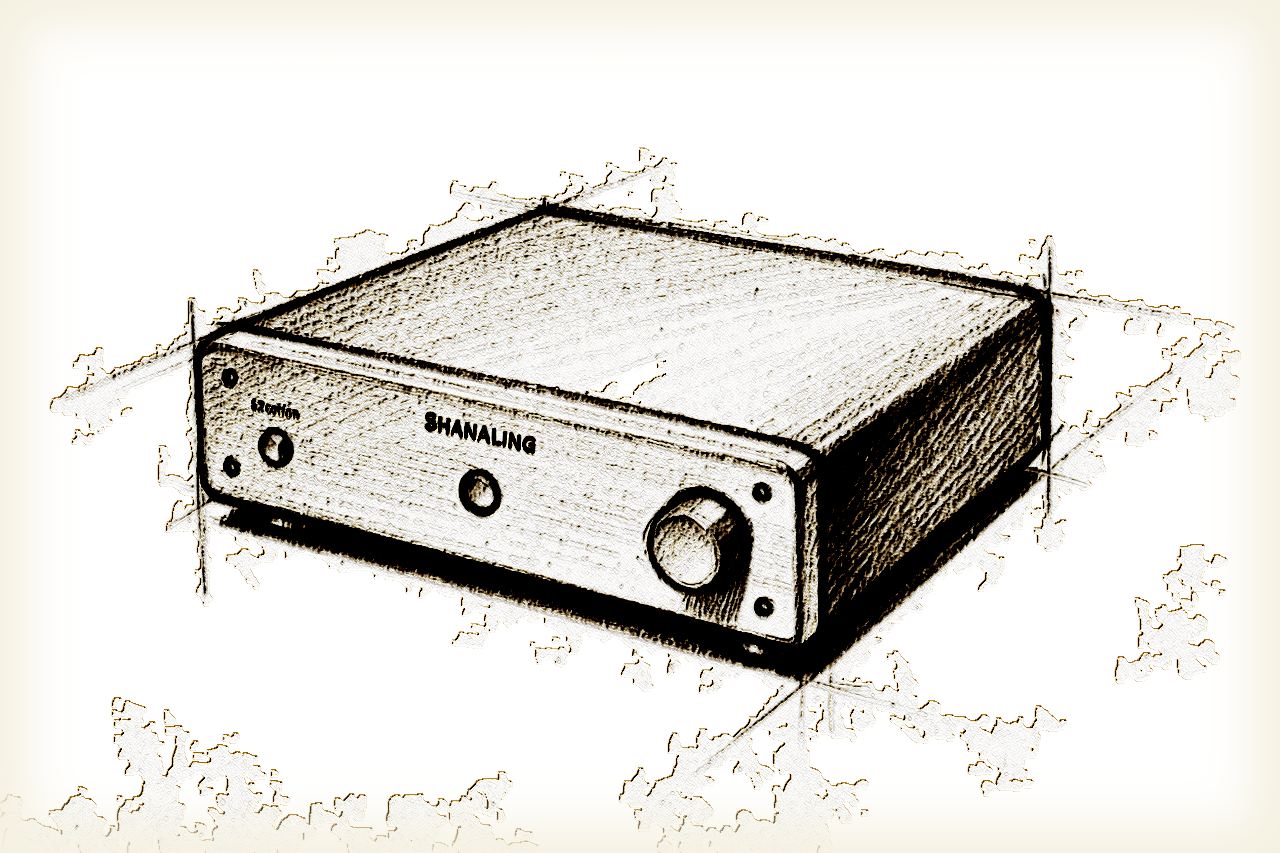
The EH90’s R2R architecture is implemented here via Shanling’s PRO R2R DAC module, coupled with a discrete and balanced headphone amplifier section. Among both specifications and materiality, it features a 3.7 kg chassis, dimensions of 280 x 230 x 83.1 mm, and both balanced and single-ended outputs—features which, in the desktop DAC market, denote physical solidity and a focus on dedicated listening[1][8]. Yet, materiality only matters from an analog standpoint when it translates into texture, control, and freedom from fatigue during extended sessions. It’s the connection with the object—the handling of the record, the weight of the chassis, the tactile feel of the controls—where vinyl and dedicated DAC culture intertwine, each with its own language.
Against the trend of ultra-compact, multipurpose DACs, the EH90 offers—at least on paper—a philosophy closer to the audiophile ethos: less is more, as long as that “less” is well-built and well-tuned. The associated vinyl edition adds an aesthetic layer to the dialogue: can such minimalist, dedicated digital conversion challenge the material aura of a well-executed pressing? The answer inevitably rests in the hands (and ears) of the listener’s own setup.
What to Listen For? Recommendations for a Useful, Honest Comparison
Though the vinyl edition is presented as a collector’s piece, its real interest emerges when comparing it from a carefully calibrated system, with the digital signal processed by the EH90. An informed listener can draw parallels—not seeking a ‘best’ or ‘purest,’ but analyzing how texture, perceived dynamic range, and spatial envelope translate across both physical paths. The key is to avoid technological fetishism: a misaligned cartridge or an incorrect EQ curve can sabotage any hypothetical advantage, whether in vinyl or digital. The EH90, by virtue of specialist opinion and dedicated design, has all it takes to do justice to demanding recordings, but as always, the verdict depends on real synergy with other gear and the listening environment[1][5][8].
What We Know and What Remains Interpretation
Here are the facts: the EH90 was officially introduced in June 2026, with a dedicated structure, significant output power, and a communication push emphasizing simplicity as a virtue[1][4][8]. The numbers are concrete, as is Shanling’s decision to accompany the product with a physical vinyl edition—a gesture linking two listening traditions. However, neither the manufacturer nor specialist press reviews provide public measurements placing the EH90 as the undisputed pinnacle of current R2R. Judgement about its ‘peak’ belongs to the realm of listening trials and critical subjectivity, not absolute metrics.
It’s true that the press—especially Darko Audio—argues the EH90 shows evolution continues and that there’s room to further refine the R2R experience[5]. But every system is only as good as its weakest link. Analytical reasoning reminds us: vinyl is no guarantee of miracles, nor is digital inferior by default. Setup, material quality, and mindful listening remain the real parameters to compare.
Physical Ritual or Digital Evolution? The Listener’s Place
The EH90’s launch and its invitation to dedicated listening underscore both the value of electronic craftsmanship and the lineage of physical ritual. The associated vinyl record does not seek to compete with digital conversion, but rather to remind us that every format—just like each cartridge, tonearm, or phono stage in the analog chain—is a means, not an absolute end. The real value lies in the possibility to compare and understand, not to crown a default winner.
Thus, faced with the ‘R2R peak’ headline, the EH90 stands more as an argument within a living debate than as a definitive conclusion. The informed listener, with a well-set chain and a full listening attitude, will find in this physical edition both a source of pleasure and an opportunity for technical and sensory learning.
Conclusion: Questions for the Next Listen
Shanling’s vinyl edition and the EH90’s technological promise remind us that ‘the peak’ is both a technical milestone and a narrative construct. In physical listening culture, what matters is not declaring an endpoint, but opening new opportunities to encounter object, technology, and critical ear. So, where does your next peak sit: in the physical movement of the stylus, in the dedicated DAC processing, or perhaps in recognizing the limits and possibilities of each format?