

The WiiM Ultra Music Streamer and Audiophile Vinyl: What Changes When the Master Breathes?
The WiiM Ultra introduces dedicated MM phono preamplification and advanced digital functions in a single box, promising to bring vinyl listening and high-resolution digital under the same fidelity logic. What persists and what transforms in the audiophile experience when the analogue master coexists with new platforms?

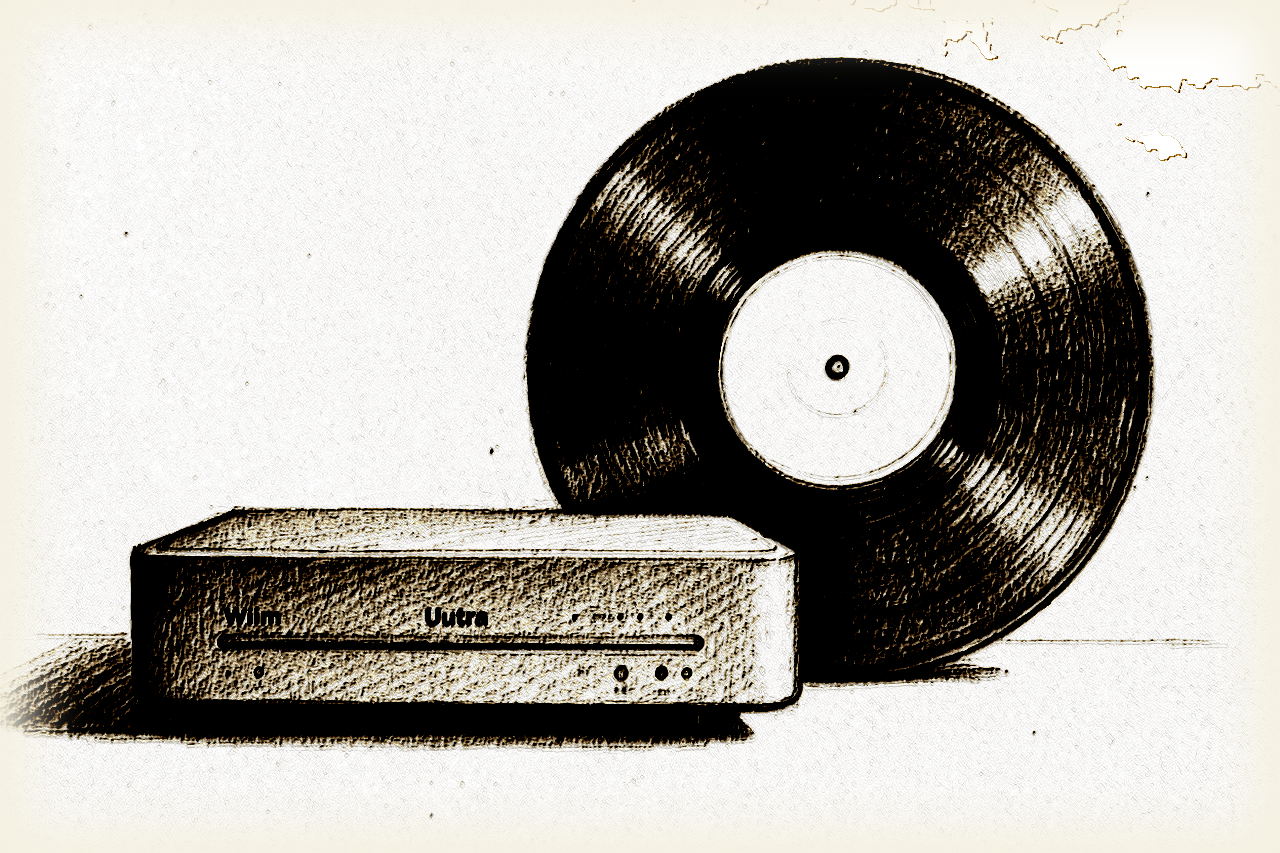
Introduction: integrating the vinyl ritual into the digital era
Vinyl's return has not meant only old turntables and nostalgia: true physical listening demands precise cabling, a cared-for cartridge, a good phono stage, and judgement when choosing reissues. In 2026, the WiiM Ultra Music Streamer appears as a technological hinge: it unites streaming, high-resolution DAC, and phono preamplifier in one device[2][3]. Before euphoria over coexistence between digital file modernity and analogue listening ritual, the relevant question is whether this hybridisation truly means advance in the vinyl experience or dilutes what is essential in the analogue master. Does it reduce steps without sacrificing texture? Does it let the disc «breathe»? Or does digital ergonomics impose itself on the disc's physical body?
Edition and context: the era of mixed listening
What is notable about the WiiM Ultra, manufactured by Linkplay Technology under the WiiM brand, is not only its high-fidelity streaming promise but its physical integration bet: a dedicated MM phono input that integrates the turntable directly[3][6]. This detail is more than a marketing argument: the need for a well-implemented phono stage has been, for decades, a bottleneck for quality physical listening systems. In audiophile culture, that link has never been trivial: not all phono stages are equal nor does every integrated solution respect analogue signal delicacy, and choosing a good preamp often marks the difference between rich, detailed listening and a flat or coloured experience. The WiiM Ultra, placing its phono input at centre, suggests it understands that responsibility.
In practice, the WiiM Ultra's function is to articulate two musicalities: that of the analogue master depending on mechanical cleanliness and surface noise; and that of native digital, with its ESS ES9038 Q2M DAC capable in theory of 32-bit/384 kHz, though playable files are limited to 24-bit/192 kHz[2][3][6]. The distinction, in sonic terms, is not trivial: noise floor, useful dynamic range, and preservation of groove 'physical pressure' are vulnerable to how the device preamplifies and digitises the signal.
Why a vinyl reissue matters in the WiiM Ultra era
Vinyl reissues, especially those seeking the 'audiophile' distinction, often play with expectations: supposedly 'purer' analogue masters, heavy-vinyl pressings, information about the recording chain. But listening is mediated by the physical chain: from cartridge to preamp. The WiiM Ultra's promise is to simplify that route, but it does so by filtering the vinyl's magnetic pulse through its own circuitry, inevitably adding a specific electronic footprint. Technically, the WiiM Ultra allows both direct vinyl reproduction (with analogue output) and its digitisation or integration into DSP and network streaming flows[3][6], something attractive for those who fear compromising preservation of delicate reissues.
In a reissue, master, pressing, and material quality matter as much — or more — than reproduction route. 'Industrial nostalgia' risks do not disappear with a modern phono stage: digital masters remixed for vinyl can lose vitality, and physical-digital-physical translation can generate a slightly domesticated version of original texture. The WiiM Ultra does not bypass these risks per se: it recontextualises them under sophisticated ergonomics, but greater or lesser listening happiness will depend on master quality and how well, in practice, it manages input signal.
Plausible listening chain: what does digital integration compromise and respect?
The WiiM Ultra's strength as a 'hub' lies in integration plausibility. The user can connect their turntable directly — provided the cartridge is MM, the standard on many contemporary and vintage models — and access vinyl under the same operational logic as streaming[2][3][6]. Its ESS Sabre DAC provides digital decoding that, though reputed for clarity and low noise, does not magically restore irrepeatable information from the original master nor compensate upstream shortcomings: a misaligned cartridge, contaminated disc, or mediocre pressing will still reveal their limits. Therefore, the WiiM Ultra is more facilitator than magician: it cares for continuity and clarity but does not replace physical attention nor resolve inherent risks in analogue listening.
Where it does innovate is in operational conciliation: source changes, digital room correction, tactile control, and multiroom integration possibility allow the experience of listening to a physical disc to insert, without ergonomic distortion, into homes that have yielded to digital convenience[3][4][6]. However, material sound transformation is perceptible only in systems whose resolution limits exceed habitual bottlenecks, and where adjustment and vinyl condition are irreproachable. That is, the WiiM Ultra makes manifest what was already present: the chain is only as strong as its weakest link.
Mastering, pressing, and source: evidence and its gaps
When tracing the path from master to groove, and from there to preamplifier and DAC, it is crucial to remember that 'audiophile' quality declarations on a reissue can be validated only with clear information about mastering stage, source file, and pressing. WiiM Ultra official sources are transparent about technical implementation — ESS model, Wi-Fi 6E technology, complete connectivity —[2][3][6], but final quality of what emerges from the speakers will depend on each disc's rigour and the reissue's editorial honesty itself. The critical user should demand (and examine) spec sheets, catalogue data, and contextualise each reissue beyond hardware promise. The WiiM Ultra can be an honest channel to reveal — or expose — virtues and shortcomings of the real master.
Commercial nostalgia risks and unverified promises
Part of the WiiM Ultra's appeal lies in the "all-in-one" narrative with "audible purity". But reality — as both independent sources and manufacturer details show[1][2][3][4] — is that no compact chain can replace disciplined thinking: neither phono input limitations (MM, no MC), nor differences between native resolution and DAC theoretical capacity, nor absence of Apple Music support alter fundamentals of physical experience[2][3][4][5]. Purchase impulses based on nostalgia, marketing operations, or shortcut promise always require verification: musicality plays out in balance between format, equipment, adjustments, and critical sense. Vinyl pleasure depends not only on phono stage nor the most modern streamer, but — always — on material correspondence between master, edition, and use context.
Conclusion: does it make the master «breathe» or simplify the ritual?
The WiiM Ultra's main value around audiophile vinyl lies in simplification and convenience, more than miraculous sonic transfiguration. Physical listening culture, which values both tactile disc detail and reproduction continuity, does not see its technical principles altered. What can change is access to a carefully adjusted experience, where digital ergonomics helps — but does not replace — the work of edition selection, cartridge choice, and turntable adjustment. The master «breathes» only to the extent reissue and complete chain allow. Well placed, the WiiM Ultra can be both a revelation tool and a test for technical honesty of reissues and modern industry audiophile promises.