

Topping DX1 II: What Actually Changes in the Digital Hi-Fi Chain?
The Topping DX1 II arrives as a desktop DAC/amp with Hi-Res ambition and a multifunction profile—but what does it concretely add to a serious digital setup? We review verified sources to separate real advances from pure marketing.
Introduction: a new compact player without miracle promises
The launch of the Topping DX1 II marks a new iteration in the field of compact DAC/amps aimed at workstations, gaming setups, and domestic listening systems. Under a clear strategy of offering high resolution and advanced features at an entry price (€119 according to the manufacturer), Topping seeks to win over both technical users and domestic listeners looking to move beyond the integrated audio of their devices[1][8]. In this context, the question for the informed user is not merely 'what does it promise', but what changes tangibly in the digital chain and which of its claims are technically and functionally documented.
What is actually announced? Precision in the spec sheet and context
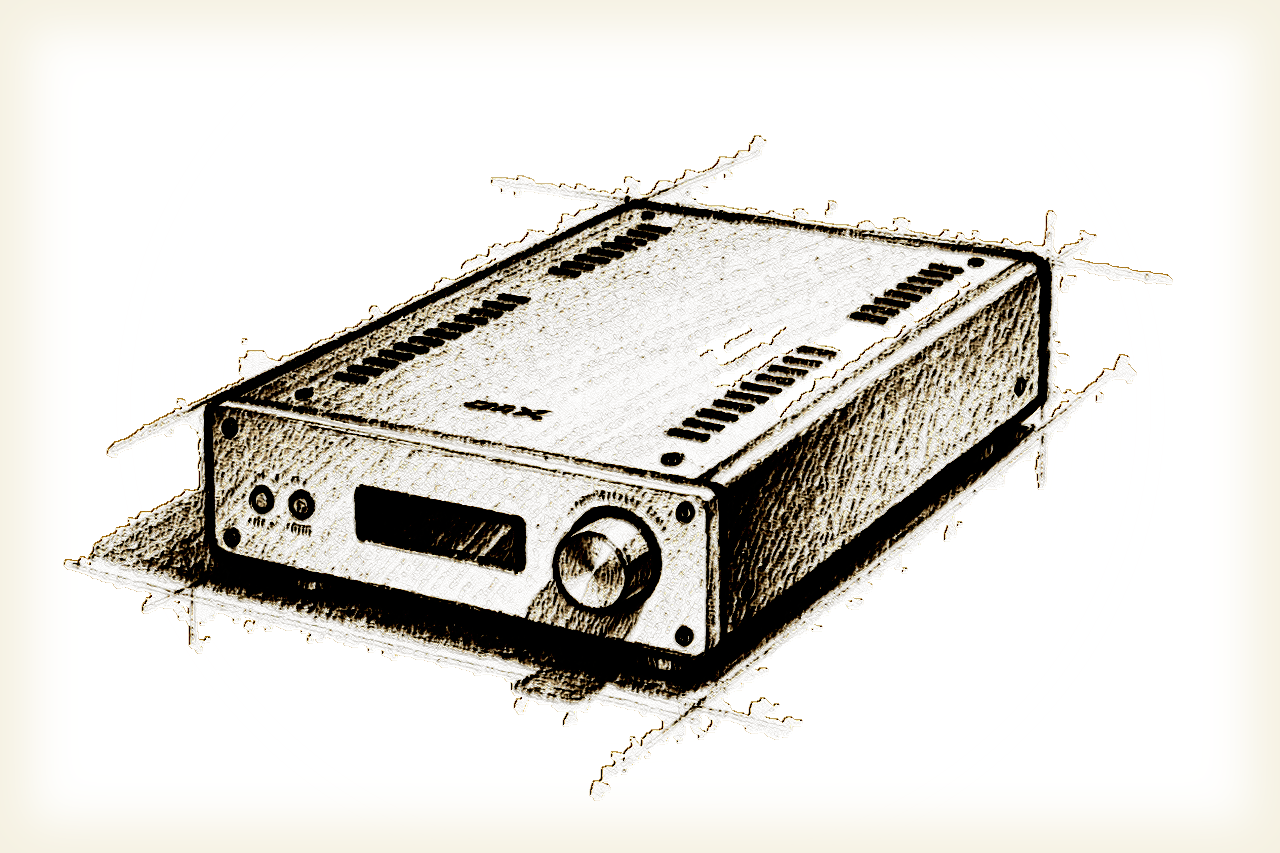
According to official sources and specialist press coverage[1][8], the Topping DX1 II is a desktop DAC/amp with a versatile focus: music, gaming, work, or audiovisual consumption. It incorporates the ESS ES9039Q2M chip (a dual-DAC in a single chip with independent channels), supports PCM up to 32-bit/384 kHz and DSD256, and integrates both a USB-C input and optical connections, plus RCA, 3.5 mm, and balanced 4.4 mm outputs. Notable is the inclusion of a 10-band parametric equaliser, rare at this price and size point. Important: there is no Bluetooth support, no promises of autonomous streaming, and no physical dual-DAC architecture (two separate chips)—features that belong to other tiers and models within the same brand[1][8].
Who is the DX1 II designed for?
From the manufacturer's communication and independent coverage[1][8], the DX1 II targets both domestic users seeking an audible upgrade over integrated audio (PC, consoles, laptops, tablets) and work or multitasking environments: listening to high-resolution music while working, taking calls or consuming multimedia, and of course gaming. The focus is not exclusively 'audiophile' in the traditional sense, but utilitarian and cross-purpose. It is relevant for those who want to control metadata precisely, experiment with advanced equalisation from the DAC/amp itself, and minimise driver complications—essentially 'plug & play' for most modern operating systems[1][8].
Real problems it addresses in the digital chain
In practical terms, the DX1 II tackles common pain points in the digital chain:
- Suboptimal integrated audio conversion: devices such as laptops, consoles, or PCs often carry minimally integrated DACs, noticeable background noise, and insufficient power for demanding headphones. A dedicated external DAC such as the DX1 II can reduce those problems, provided the digital source is of quality and the chain is correctly configured.
- Straightforward high-resolution management: support for PCM 32/384 and DSD256 broadens compatibility with real Hi-Res sources, though in practice few commercial recordings exceed 24/192 or DSD64 outside very specific niches.
- Output flexibility and headphone control: the simultaneous presence of a balanced 4.4 mm output (for modern headphones with healthy impedance) and the classic 3.5 mm covers most domestic needs.
- Built-in parametric equaliser: the ability to adjust 10 bands (frequency, gain, bandwidth) directly from the DAC is added value for those seeking to tailor response to their headphones without relying on software (or risking non-transparent digital equalisation artefacts in third-party applications).
There are no explicit promises of total galvanic isolation, ultra-low jitter claims, or proprietary network solutions: the design appears pragmatic and intended for local configurations, not for integration as a 'streaming server' or network endpoint. This positions it as a clean solution for direct desktop upgrades, not for complex integration in multi-room or Roon-ready systems.
Credible differences versus entry and mid-range category
Compared with DACs integrated in laptops, consoles, or motherboards, the theoretical (and in many cases practical) improvements are notable: a better DAC chip, greater isolation from internal electrical noise, and a headphone output capable of handling medium-to-high impedance models. However, relative to other external DAC/amps in the €100–200 range, differences concentrate mainly on the built-in equaliser, the choice of the current ESS chip, and the balanced 4.4 mm output. Other common selling points such as maximum resolution, output power, or response curve fall within typical category margins and do not present disruptive leaps.
The built-in parametric equaliser (10 bands) does represent a relevant distinction, because it allows fine adjustments and user presets from the device itself[1][8]. This reduces dependence on the software ecosystem and limits compatibility or update problems that can arise when using software-only equalisers.
Hype risks and undocumented claims
As with any digital hardware debut, grey zones exist between what the spec sheet promises and what the user will actually experience:
- Price and versions: the reported price difference between marketplace (€104.9) and official (€119) is not documented by primary sources and does not guarantee version equivalence or European support[3][8]. Prices at unofficial retailers often vary and may carry warranty or after-sales service risks.
- Connectivity confused with earlier models: some sources confuse DX1 II specifications with the original DX1 (without optical or balanced output) or higher models (Bluetooth, dual chip, higher sample rates), but officially the DX1 II lacks Bluetooth and uses a single ES9039Q2M DAC[1][8].
- Absence of public objective measurements: there are no distortion, noise, or frequency-response measurements from independent laboratories in the sources analysed, so any claim of 'superior sonics' should be treated as unverified until new technical publications appear.
- Real-world limitations versus Hi-Res hype: although PCM/DSD compatibility is broad on paper, practical relevance for daily listening will depend more on recording quality, software used, and physical system integration than on the advertised maximum figure. Remember: the 'Hi-Res' promise alone does not determine listening experience, and often depends on how the DAC-software-host combination manages sessions and network resources.
What should the user know before buying or integrating this model?
The informed user should distinguish between documented advantages (Hi-Res support, 10-band PEQ, USB-C port, optical/RCA/balanced outputs, plug & play compatibility) and more diffuse marketing claims (universal improvement over any DAC, guaranteed sonic leap, resolution magic, and so on). As always in digital, much of the perceived 'improvement' derives from correct integration and the elimination of trivial bottlenecks: a faulty cable, a noisy source, outdated drivers, or improper use of host software.
The real leap will be noticed mainly by users coming from mediocre integrated DACs, with poor headphone outputs or frequent incompatibilities. Those who already have a contemporary dedicated DAC/amp will notice marginal improvements, centred mainly on PEQ integration and driver reliability. The network environment, metadata management, and software work (Roon, Qobuz, Tidal, JRiver, Foobar2000) remain crucial factors outside the hardware itself, and the DX1 II provides no proprietary network management or streamer/server endpoint.
Conclusion: realistic advance and utility in the chain, without magic
The Topping DX1 II lands as a relevant proposal within the entry tier for serious digital setups: a compact, multipurpose DAC/amp with built-in PEQ and sufficient connectivity for most domestic and work desktops[1][8]. Improvements over integrated audio or slow-access setups are appreciable and practical; relative to the external DAC/amp category, the leap is incremental rather than disruptive. Caution is necessary with claims of absolute sonic transformation or miraculous compatibility: the digital ecosystem depends as much on its weakest link (network, drivers, source) as on the DAC itself. In sum, a tool that solves concrete problems and delivers clear value, but that only realises its potential in a well-configured chain free of marketing smoke.