

Bitwig Studio 6.1 Beta Rebuilds Sampler Around Slicing, Spectral and Granular Modes
Bitwig Studio 6.1 is in public beta with slicing in every play mode, Spectral time-stretching, Fragments granular playback, pitch detection and revised multisample editing.
Bitwig Studio 6.1 is a beta, not a finished release
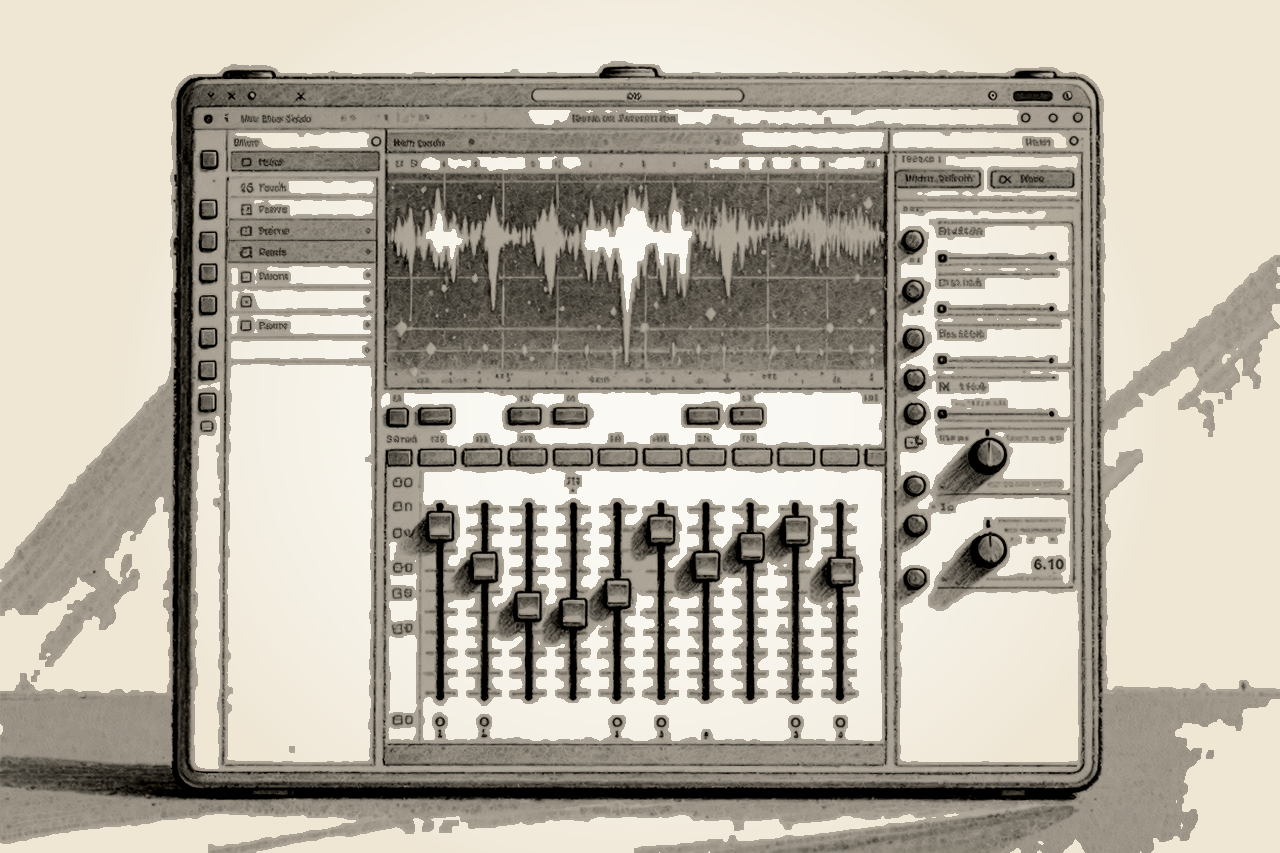
Release status: Bitwig describes 6.1 as a public beta, with a summer release target rather than a completed launch. The company confirms slicing across play modes, Spectral and Fragments modes, tempo and pitch detection, and improved multisample editing.[1][2]
Few areas in modern music production workflows—ranging from electronic composition to complex soundscapes—demand as much precision and technological flexibility as creative sampling within a digital audio workstation. The arrival of Bitwig Studio 6.1, still in its announced beta stage, marks a concentrated development effort at the core of its Sampler tool, aiming to address both the technical limitations and the artistic demands of high-level producers. The key idea here is that the advances in Bitwig Studio 6.1 not only reinforce the technical capabilities of the DAW, but seek to renew the dialogue between the rigor of professional production and contemporary musical expressivity.
What Is New in Bitwig Studio 6.1?
Bitwig Studio has announced a major update, currently in testing, focused primarily on sampling capabilities: featuring a mode for intelligent spectral analysis, a redesigned automatic slicing architecture, the inclusion of various advanced time-stretch algorithms, and especially, the introduction of a granular engine dubbed "Fragments." This array of features aims to transform the Sampler from just a sample playback device into a flexible platform for multidimensional sonic manipulation.
Who Is This Development For?
While the update may pique the curiosity of users at any level, it is clearly aimed at those engaged in professional production, advanced sound design, experimental music, mixing, and mastering in studios associated with contemporary electronic music, ambient genres, music for media, or academic composition. The focus on deep integration and advanced modulation caters both to creators requiring automatic slicing on large sample banks and to those employing timbral recontextualization as a core compositional method.
The Core Problem: Adapting Studio Precision to Creative Flow
One longstanding challenge for Samplers in DAWs has been to move beyond simple sample playback and provide functions that enable users to deconstruct, modify, and reorganize source audio with the fidelity required by professional mixing. Until now, advanced granular processing, pitch reconstruction, and polyphonic stretching have largely been the domain of external tools or auxiliary packages. Bitwig Studio 6.1 aims to bring these processes—typically fragmented across external plugins—into the DAW's native workflow, ensuring experimentation does not come at the cost of productive structure or mastering precision.
Credible Differentiators: Slicing, Pitch Analysis, and Fragments
The first standout innovation is the new automatic slicing system, utilizing real-time spectral analysis and pitch intelligence to dissect samples in a musically meaningful way. This facilitates the creation of multi-slice instruments, drum kits, or complex sequences without the manual labor often required by other DAWs. Slicing based on tonal content—not just transients or volume peaks—helps retain melodic or rhythmic intent, crucial for techniques such as re-harmonization and vocal stem recycling.
The integrated intelligent pitch analysis provides a shortcut for automatically identifying notes or phrases within a file—especially valuable in dense arrangements or when working with vocal recordings where articulation is critical. From a professional perspective, this can save editing time in projects where the clarity of the vocal or acoustic instruments is key to both the mix and the final naturalness.
Special attention goes to the Fragments granular engine, which brings microsonic fragmentation and reconstruction fully into the Bitwig workflow without relying on third-party solutions. While granular synthesis has been an area of sonic experimentation for decades, it is rarely fluid, responsive, and internally parameterized enough for high-level production. Here, Bitwig seeks to lower that barrier, offering a straightforward visual interface atop a mathematically complex engine—useful for texturing simple samples, reinterpreting polyphonic recordings, or building controlled spectral layers.
Innovations in Time-Stretching and Audible Results
The overhaul of time-stretching methods directly impacts mixing precision and final timbral authenticity. Bitwig Studio 6.1's advanced time-stretching adds multiple algorithms tailored to different content, with specific modes for percussive, polyphonic, and monophonic material. This approach maintains not just general pitch but also the integrity of harmonics and original transients. If implementations deliver as promised, this could mean less mixing fatigue, vocals that stand out above the noise floor, and greater control over phrasing and timing for acoustic instruments.
This is particularly relevant for spatial audio projects and immersive mixing, where temporal coherence and the elimination of stretching artifacts are perceptible in professional monitoring scenarios. Precisely distinguishing algorithms for various content types is significant, as it reduces cumulative errors in large projects and avoids the artificial feel that often afflicts generic stretching engines.
Implications for Home Listening and Professional Monitoring
For those moving between studio environments and Hi-Fi playback, the emphasis on tonal integrity and the absence of digital artifacts is crucial. Advances in tonal slicing and granular processing, if resulting in minimal artifacts, promise a less fatiguing and more authentic listening experience as productions make their way into living rooms or home theater setups—particularly with vocals and acoustic instruments. At the same time, there remains uncertainty over the real degree of timbral transparency under heavy modulation: technical specs and initial demos do not equate to external validation in uncontrolled critical listening contexts.
The typical risks with DAW launches focused on 'innovation' lie in the gap between the promise of creative flexibility and consistency in large projects, or between the idea of extreme modulation and actual clarity on midrange headphones or monitors. In the absence of independent testing and real-world measurements, it is wise to temper any optimism with engineering caution.
Potential Hype and Points to Consider Before Adopting
While Bitwig Studio 6.1 aims to position itself at the cutting edge of sample-based audio in multi-format DAWs, much of its communication still depends on promotional material and early-stage beta functionality. Without access to independent tests or measured data from professional environments, the usual uncertainty remains around stability, resource use, and genuine integration with external hardware—key factors determining viability in hybrid studios or extended mixing sessions.
The focus on automatic pitch or granular analysis algorithms can be a double-edged sword for ultra-precise workflows: excessive automation may reduce interpretative control and lead to less personalized edits, which is critical when vocals, micro-dynamics, and individual character are the real tests for any professional or analytical Hi-Fi environment. The absence of public technical reviews, for now, limits any firm recommendations and suggests maintaining a non-dogmatic stance—at least until performance is documented outside Bitwig's direct testing ecosystem.
Conclusion: Where Is Professional Sampling Headed?
Bitwig Studio 6.1, with its renewed focus on the Sampler, envisions a future where sonic manipulation is not just a matter of mathematical power, but of meaningful integration into professional routines—from the studio to home listening. The balance between careful automation and artistic control will be the standards by which this technology’s real success is measured. For now, the idea of innovation will only take shape through independent validation and sustained use in mixing, mastering, and demanding vocal work. Those seeking a combination of granularity, intelligent slicing, and advanced stretching have reasons to observe this development but should remain cautious until robust validation arrives both inside and outside Bitwig’s own lab.