

Lyngdorf TDAI-2210: simplifying the digital chain does not mean replacing everything
Specialist coverage places streaming, amplification and RoomPerfect in the Lyngdorf TDAI-2210. Whether it can replace separate components still depends on sources, inputs, documented network support and firmware.
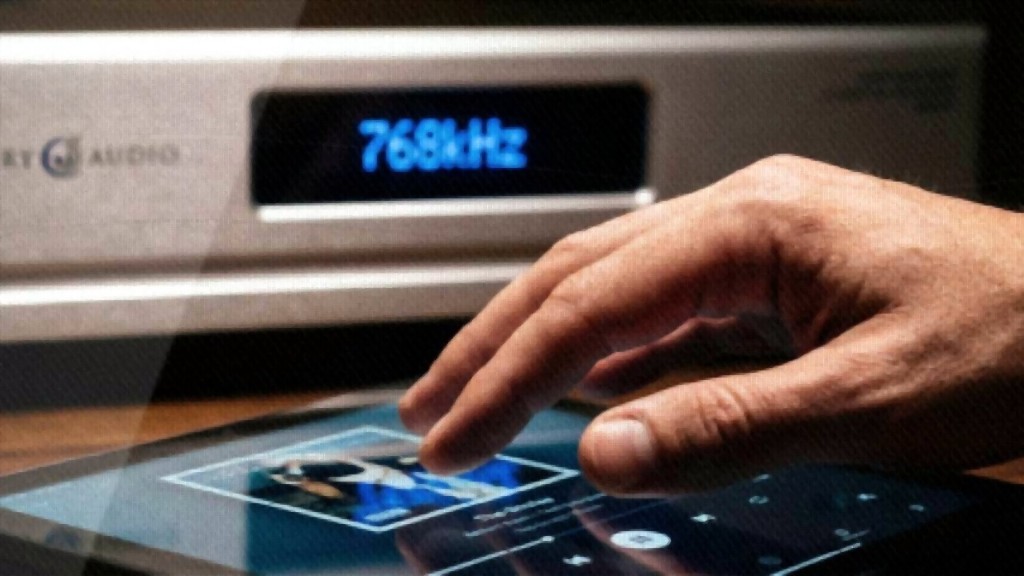
The useful question about the Lyngdorf TDAI-2210 is not whether one box is automatically preferable to several. It is whether the functions it combines match the sources, connections and operating requirements of a particular system.
Specialist coverage describes the TDAI-2210 as a streaming integrated amplifier with Lyngdorf’s RoomPerfect room-correction system.[1][2][3] In functional terms, it can bring together streaming, handling of connected digital sources, room correction and speaker amplification. That concentration can reduce the number of separate components between a source or service and the loudspeakers.
What it can centralise
For a system built mainly around digital sources, the intended chain is straightforward: a streaming service or connected source reaches the unit, the unit processes the signal, RoomPerfect may be applied, and the amplifier feeds the speakers. This is the basis for treating the TDAI-2210 as an integrated alternative to a separate streamer and amplifier.
Enjoy the Music and What Hi-Fi? publish power figures of 105 watts per channel into 8 ohms and 210 watts into 4 ohms.[1][3] Enjoy the Music also attributes coaxial, optical, USB-C and HDMI eARC inputs to the model, along with analogue and HDMI module options.[1] That is a published specification list from one external source, rather than a complete compatibility record established by the evidence available here.
Why replacing separate components remains conditional
Integration does not by itself establish that every external component becomes unnecessary. A separate streamer, DAC or amplifier may provide a connection, output, switching function or processing option that the rest of a system still needs. The supplied coverage does not provide a controlled comparison showing that the TDAI-2210 is functionally or sonically equivalent to every combination of separate components.
The word “DAC” also needs care in this context. Some published coverage uses it as part of a broad description of the TDAI-2210’s digital functionality, but the supplied evidence does not include complete, current primary documentation that resolves every detail of its signal architecture. It is therefore more useful to check what the unit accepts and does within a specific chain than to assume that a familiar component label settles the question.
Checks before reducing the box count
- List every source and required connection, including any analogue equipment and HDMI devices.
- Check whether the documented input provision covers those sources and whether an optional module is required.
- Confirm the streaming services, control method, network requirements and firmware support documented for the version under consideration.
- Decide whether RoomPerfect fits the intended room and speaker setup without assuming a universal audible improvement.
- Map the complete signal chain before removing a component that supplies switching, outputs or processing not duplicated by the TDAI-2210.
What the available coverage does not prove
The cited reports support the TDAI-2210’s position as a streaming integrated amplifier with RoomPerfect and publish key specifications.[1][2][3] They do not verify a complete and current matrix of streaming services, protocols, control platforms, networks or firmware versions. Nor do they demonstrate universal network stability, universal compatibility or a universal sonic advantage over separate streamer, DAC and amplifier combinations.
Fewer boxes can mean fewer physical interfaces, but not automatically fewer integration decisions. The TDAI-2210 merits consideration when its documented inputs, operating model and ecosystem match the listener’s existing chain—not simply because it combines several functions in one chassis.