

HANA Umami Black: Cartridge Construction, Loading and the Missing Listening Evidence
A provenance- and setup-led guide to HANA’s Umami Black moving-coil cartridge: documented construction, loading questions, system dependencies and the boundary around sonic claims.

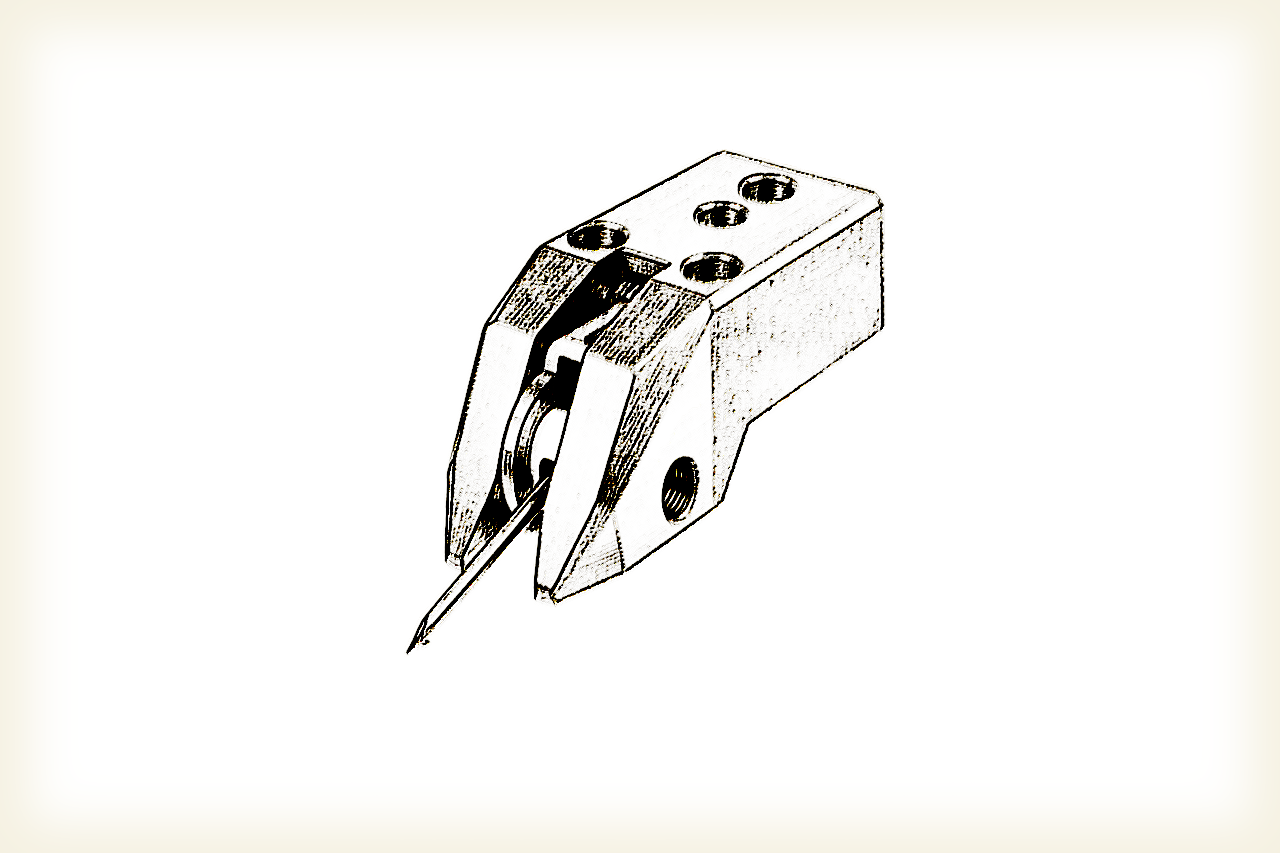
HANA-Umami Black: Why This Cartridge Matters in the Vinyl Chain
The first task is to identify the product correctly: HANA announced the Umami Black moving-coil cartridge, not a generic “Premium Cartridge.” Its value cannot be inferred from rank in the range. Construction, electrical loading, arm compatibility and documented comparison conditions must be separated before discussing sound.[1][2]
Evidence boundary: Manufacturer documentation establishes product identity and design claims; specialist sources supply attributed impressions. LineaSonora did not mount, align or audition this cartridge. The article therefore treats sonic descriptions as source claims, not findings.[1][3][4][5][2]
Correcting the Record: It’s Not "Premium" – It’s "Umami Black"
Before examining what the Umami Black brings, it is crucial to correct a key fact: the product referenced in various unofficial reports is not called "Premium," but HANA-Umami Black. Introduced in October 2025[5], this cartridge is the work of Excel Sound Corporation and bears the distinctive imprint of Okada, a Japanese engineer who has spent over five decades perfecting the art of vinyl.[1][4][5] The classification is clear: a high-efficiency moving coil (MC) cartridge, far from being a mere variant with premium materials. Its nature stands out through both mechanical decisions and aesthetic and technical conception.
Technical Innovations: Mechanics and Materials
Where the Umami Black sets itself apart from any previous Hana cartridge is in its use of materials and architecture never before employed in the line. The first ever diamond cantilever on a Hana—the hardest and most stable material, now applied for optimal signal transfer—pairs with a completely new moving coil generator, the so-called OKD generator. This incorporates the world’s first "integrated pole piece and rear yoke" in this context, along with a U-shaped inverted front yoke. Together, these innovations are designed to optimise the mechanical energy transfer from groove to electrical system and, thus, to the listening experience.[1][3][4]
The armature, crafted from a hybrid carbon and permalloy alloy (combining properties of nickel, iron, and carbon) with 4N purity copper wire, keeps the moving coil impressively light. In technical terms, this yields an output of 0.3 mV at 5 Ω, an extended frequency range (15 Hz–50 kHz), and a total weight of 11.3 g.[1][2] The Japanese Urushi lacquer exterior is not merely aesthetic; it adds stability to the body and reflects Excel Sound’s commitment to artisanal craftsmanship.
From Spec Sheet to Groove: Does It Really Matter When Listening?
For vinyl enthusiasts, talk of innovation can sound like marketing unless it connects with concrete consequences in playback. So what does it offer to those who listen critically, in the physical sense? Without claiming automatic superiority—and setting aside unsupported claims—the combination of diamond cantilever and OKD architecture has several plausible potentials: lower moving mass, more precise groove modulation transmission, and possible improvements in transient response, the element that distinguishes between natural phrasing and blurred attack, especially on demanding recordings.
However, theory only takes shape in the actual system: the cartridge demands careful setup, a compatible arm, and a phono stage with suitable sensitivity, without which even the finest engineering cannot prevent loss of nuance or increased surface noise. Moreover, its extended response will offer little if the rest of the system limits openness. Perceiving changes in texture, instrumental continuity, or air between details will depend as much on the full setup as on groove geometry and integrity.[4]
Marketing vs Reality: Is This Just a Red with a Diamond Cantilever?
Some surface-level readings suggest the Umami Black is simply an aesthetic evolution of the Umami Red. This view has been explicitly refuted by the manufacturer, who insists it’s not just a change of material, but a complete overhaul of the generator, magnetic circuit, and coil winding.[1][5] The specifications confirm substantial differences, and independent reviews indicate that the OKD/yoke/armature assembly marks at least a diametrically different approach from simply swapping out a part. From the physical listening culture perspective, the lesson is clear: neither name nor price suffice on their own; engineering must always manifest in the combined outcome of system, record, and precise setup.
What Should Buyers Know Before Deciding?
The HANA-Umami Black is not intended—and should not be conceived—as a cartridge for every system. Its low output and arm/phono stage requirements place it in the realm of careful integration where electrical and mass compatibility are critical. The informed user should be aware of the need for a tonearm with suitable effective mass and a MC phono stage capable of handling low output; otherwise, investment in materials and architecture can be diluted or, worse, yield unintended sonics. As with any premium cartridge, it also requires meticulous adjustment: VTA, tracking force, alignment, and correct anti-skating to avoid premature wear.
It is essential to be wary of promises of "magic" implied in vinyl: the cartridge—even if highly sophisticated—is just one link in a chain where record, master, pressing quality, and maintenance define constraints and possibilities. The analogue experience depends as much on objective excellence as on the subjective ritual.[4][2]
The Balance Between Myth, Progress, and Practicality
Thus, the arrival of the HANA-Umami Black is more than a mere announcement: it illustrates how cartridge engineering advances hand in hand with vinyl’s resurgence, and highlights the necessity to evaluate each innovation within its actual context and setup. Fascination with the object—its urushi, contained mass, and diamond cantilever craftsmanship—, while valid, only reaches its full meaning when mechanical/electrical transfer unlocks the potential inscribed in a well-made record’s groove.
For those immersed in physical listening, adopting the Umami Black is to embrace, knowledgeably and without fetishism, the real improvements such a cartridge lineage can bring. But caution remains essential: superiority is measured within the listening system, never in isolated specifications. Editorial recommendation is twofold: with sound information, vinyl lovers can distinguish between real substance and excessive narrative, always prioritizing full integration of their playback chain.[1][3][4][5][2]
The next useful evidence is system-specific
A buyer needs output, recommended load, cartridge mass and tonearm compatibility alongside a repeatable setup record. The Umami Black may be HANA’s reference model, but that position does not make it universally compatible or superior. The honest next step is a documented cartridge–arm–phono-stage comparison.