

Classical Avant-garde Under the Microscope: What the Vinyl Guide Reveals About the Most Controversial Era of Academic Music
The editorial guide ‘Grappling with the Avant-garde: Revisiting Classical Music’s Most Experimental and Divisive Period (Part 3)’ invites us to rethink how vinyl and CDs preserve—and transform—the experience of radical classical music, beyond format fetishism.
A Review from the Groove: Editorial, Listening, and Material Legacy
In the world of audio collecting and high fidelity, the physical edition is not just a carrier of memory: it can also redraw the perception of entire eras. ‘Grappling with the Avant-garde: Revisiting Classical Music’s Most Experimental and Divisive Period (Part 3: A Guide to the Avant-garde on Vinyl and CD)’[8] is, above all, an editorial guide and a historical essay. It is not the celebration of a "new release," but rather a thorough investigation into how recordings from the experimental era of classical music—especially between 1945 and 2000—survive and transform via physical formats and playback.
Between Revolution and Plurality: The Context of Classical Avant-garde
The avant-garde movement in classical music cannot be understood without its radical drive for rupture and its conflicted relationship with tradition[1][2]. From the late 1940s and throughout the twentieth century, composers such as Karlheinz Stockhausen and John Cage were at the epicenter of this revolution, exploring electric sounds, asymmetric rhythms, and fractured musical structures. The Darmstadt School in Germany became a center and laboratory for this sonic dissidence from 1950, fostering the growth of musical modernism[1]. Techniques such as Cage's prepared piano, microtonality, tape usage, and electronic experimentation challenged not only the ear but also the physical expectations of playback media.
By tracing these recordings, the ‘Grappling with the Avant-garde’ series places a fundamental tension in the foreground: pluralism was the true legacy of modernism. Although these composers expanded and destabilized language, tonality, far from vanishing, engaged in dialogue and coexisted with new forms of experimentation, disproving the narrative of a total rupture[2][8]. This results in hybrid figures: Stravinsky in his late period or Arvo Pärt, whose works—markedly spiritual, often tonal—enter into active dialogue with experimentalism.
The Groove and the Medium: How Physical Editions Change the Listener’s Experience
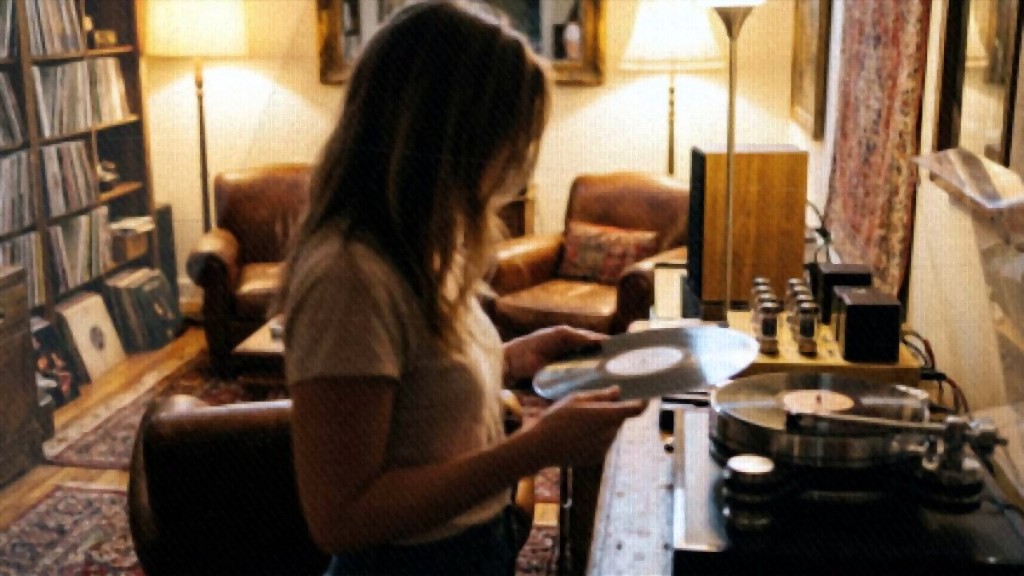
The third part of the series, structured as a listening guide for vinyl and CD, provides a critical catalogue of recommended recordings from labels such as Deutsche Grammophon, Nonesuch, and ECM[8]. Here, the focus is no longer merely musicological: the decision to release on vinyl rather than digital formats generated particular technical challenges and opportunities. Works like Stockhausen’s ‘Stimmung’ or Cage’s ‘4’33”’, loaded with dynamic subtleties, take on a different presence depending on the pressing quality, condition, and system setup. The physical ritual of handling an ECM edition—cleaning the surface, aligning the cartridge, listening for ambient clues and textures—merges with the inherent difficulty of the music itself: attentive listening, guided not by melody but by atmosphere, timbre, or the unusual use of space and silence.
The editorial guide is explicit: the physical groove of vinyl imposes distinct limits and possibilities.[8] Compositions with great dynamics or unconventional instruments may suffer in poorly pressed records, where surface noise and compression alter the composer's intent. Similarly, some CD reissues have been able to preserve (or even restore) the original microdynamics and timing when the old analog vinyl showed signs of fatigue. In the end, there is no magic, universally superior format; rather, each work interacts with its technical and contextual surroundings.
Is Vinyl a “Natural” Home for the Avant-garde?
Between myth and technical specificity, experimental repertoire on vinyl requires careful treatment. Many recommended historical recordings—especially those by Stockhausen and Crumb—were first issued on vinyl, benefiting from the boldness of pioneering labels in the sixties and seventies. However, the stereotyped “warm sound” of vinyl, often overidealized, may not do justice to the clarity of percussive attacks, extreme instrumental separation, or absolute silence that define much of the avant-garde.[8] The transition to CD, with its lower noise floor and greater dynamic range, led some engineers to rebalance masters so as not to saturate or lose the tension inherent in fragmented or electronic passages.
What matters most to the listener is not a dogmatic notion of superiority based on format, but an awareness of each playback chain's limitations and attributes. A well-configured system—from the choice of cartridge and tonearm care to pressing condition and phono preamp—can enhance, without mythologizing, both the unsettling polyphony of Penderecki and the bare atmosphere of John Cage.
The Plural Experience: Beyond the Object Fetish
‘Grappling with the Avant-garde… Part 3’ rejects the simple romanticism that would reduce experimental music to collector’s oddity[8]. By opening discussion around sources, reissues, and listening context, it foregrounds a central issue: today’s listener accesses a wide field of possibilities. The same work—George Crumb’s ‘Black Angels’, for example—can resonate differently with every playback chain, depending on tracking force, mastering, tape transfer, or medium condition.
This demands a critical revision of the vinyl phenomenon: the tactile and material experience—the ritual of opening an old edition—cannot be separated from technical fragility. The editorial encourages informed collectors to evaluate sources, be wary of “premium” editions lacking mastering information, and prioritize listening over nostalgia for the object. The value lies not in turning vinyl into a relic, but in making it an active pathway into the diversity and risk of the experimental era.
Navigating Sources: Verification and Warnings
An essential point, often omitted in coverage of musical releases, is that ‘Grappling with the Avant-garde…’ is not a commercial disc reissue, but a critical editorial project published at Tracking Angle[8]. Thus, there is no “manufacturer” or new pressing behind this title, despite what its name may suggest. Details on work selection, historical context, and record labels cited come from independent and musicological sources[1][2][3][8], not from promotional materials.
In this series, verifiable facts—such as the centrality of the Darmstadt School, the persistence of tonality alongside atonality, or the selection of specific works for the guide—are supported by specialist studies and published essays. There are no noise measurements, master comparisons, or invented listening assessments. This provides useful guidance for listeners seeking to look beyond marketing and explore the analytical landscape of physical editions.
Conclusion: The Groove as Plural Archive, Not Dogmatic Pedestal
Revisiting classical avant-garde through the lens of vinyl and CD—as proposed in ‘Grappling with the Avant-garde: Revisiting Classical Music’s Most Experimental and Divisive Period’—is an invitation to understand how material experience inscribes sonic memory, without fetishizing the format[8]. It is clear that neither vinyl guarantees authenticity, nor does digital betray the original intent; both are intermediaries, shaped by technical variables, industry contexts, and editorial decisions, each radically influencing our perception of twentieth-century music at its most challenging. The function of physical listening here is to unearth, compare, and nuance—not reconstruct a purist past, but to renew its risk and diversity in the present-day audio landscape.