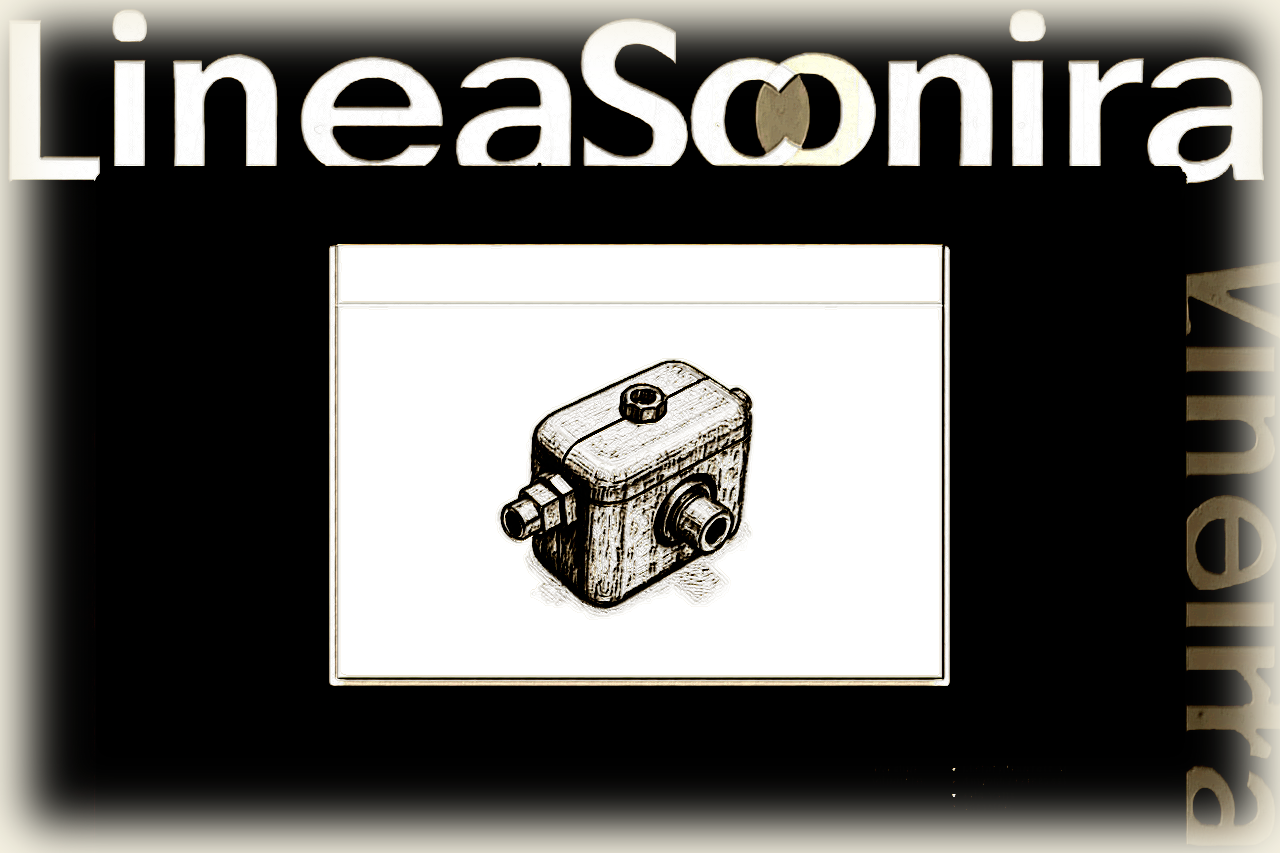

Fryette Valvulator Mini Under Editorial Review: Compact Tube Buffer Examined
The Valvulator Mini promises to bring the immediacy and character of a true tube to the heart of the modern pedalboard, but how much is true innovation versus marketing? We examine the official announcements and the critical questions demanding listeners should still ask.
Why Does the Launch of the Valvulator Mini Matter?
In the guitar world, where signal quality is as crucial to the experience as the performance itself, buffers have evolved from being marginal accessories to tone guardians. The unveiling of the Fryette Valvulator Mini reignites the debate over how relevant—or even necessary—a tube solution is in an environment dominated by modelers and digital chains. The informed listener is not merely seeking the promise of 'studio tone' from a single pedal, but aiming to understand what actual effect the technology has on their signal, dynamics, and real expressive range in hand.
Background: From Classic Valvulators to the New Mini Format
The Valvulator Mini is explicitly conceived as a portable response to the historic Valvulator 1 Vacuum Tube Buffer, a product renowned among guitarists with complex systems and large pedalboards[4][5]. Fryette's decision to offer a Mini version addresses clear market demands: adapting the classic tube buffer to the needs of both compact pedalboards and portable studio setups—without sacrificing the signature character associated with the brand and the 12AX7/ECC83 tube[1][4]. As such, the product arrives with a recognized legacy, but not without questions regarding the real relationship between size, functionality, and sonic contribution.
What Fryette Announces—And What Needs Verifying
Officially, the Valvulator Mini is a high-voltage buffer built around a JJ 12AX7/ECC83 tube, powered by 120V AC and equipped with multiple outputs, including a balanced XLR for use as a tube DI both live and in the studio[1][3][4]. Its primary function, per the brand, is to “convert the signal from high to low impedance,” thus preserving high-frequency content and dynamics typically lost in long effect chains or cables[1][4]. Fryette also highlights the four integrated dual-position switches: two for impedance, one for phase, and one for a ground loop to counteract noise—features aimed at providing fine control over buffer integration in any setup.
Caution is nonetheless advised: launch videos and some secondary channels have circulated contradictory claims, such as supposed 12V operation—which is refuted by the official spec sheet—and prices that differ significantly from the figure published on Fryette’s website[2][3][4]. For high-fidelity audiences and professional musicians, such discrepancies are not mere details, but warning signs that information must be carefully checked before making decisions.
What Does a Tube Buffer Really Add to Listening?
Beyond technical promises, the central question for the listener is what real role a tube buffer plays in the modern context. A buffer essentially aims not to color, but to preserve signal integrity, minimizing degradation from cable capacitance and impedance mismatches—effects that are especially pronounced in long chains or digital systems, where the signal may become weak or dull[4]. What Fryette introduces here is the addition of a real tube which, according to the manufacturer, acts as a "tone sweetener": in other words, adding presence, revealing subtle harmonics, and maintaining the guitar’s tactile response within pedalboard and modeling setups[1][4]. The stated goal is for the guitarist to feel immediacy—that sensation of being "plugged directly into the amp"—even in complex or digital environments.
In practical terms, for those building substantial pedalboards, the key is whether the buffer maintains the guitar’s energy, attack, and original brightness, without losing naturalness or increasing background noise. In studio settings, its XLR output is designed to facilitate direct recording without extra stages, potentially resulting in greater simplicity and less unwanted coloration. All of this, however, ultimately depends on the full signal chain and the specific use context.
The Necessary Skepticism: Distinguishing Claims from Verified Facts
Although Fryette maintains that the Valvulator Mini uses the same JJ 12AX7/ECC83 tube as classic tube preamps and runs at 120V AC (as opposed to the usual 9 or 12 volts of most compact pedals), the only confirmation for this comes from the official website and specialist media—not from videos, where specification errors have been made[1][3][4]. Similarly, the "revealing harmonics" and "tone sweetener" functionality is partly a promise that is difficult to assess without controlled testing or direct experience with the device in a comparable setup.
The manufacturer predicts that the high-voltage circuitry should deliver a noticeably greater dynamic range and harmonic richness than conventional solid-state buffers. Nevertheless, in the absence of published measurements and direct comparison tests, readers are advised to be cautious: neither a “tube tone” nor “vintage dynamics” can be accepted as fact without practical corroboration. What can be affirmed is that the technical fundamentals—high-voltage tube, impedance conversion, balanced outputs—are documented in primary sources[1][4].
What Does—Or Doesn’t—Change for Today’s Listener or Pedalboard?
For guitarists who have already experimented with basic buffers, the practical question is whether the Valvulator Mini justifies inclusion by yielding a sense of improved presence, energy, or naturalness throughout the setup, especially when used in combination with long effect chains or digital modelers. This ultimately depends on the entire system: the synergy between the buffer and other pedals, cable quality and length, and the sensitivity of the connected amp or interface.
In real-world listening, a tube buffer may impart certain elements of classic sonic “body,” but it is unlikely to fully restore all the attributes of plugging a guitar straight into a high-end amp. What the Valvulator Mini seeks to deliver is stronger signal robustness, less attenuation of high frequencies, and potentially greater dynamic feel under demanding conditions. The inclusion of a tube DI output adds value both in studio situations and in scenarios where portability and quick setup are priorities; nonetheless, these tangible benefits will vary with each rig.
Price, Availability, and Advice for Readers: Check Sources, Compare Contexts
According to the official website and trusted media, the Valvulator Mini is already shipping with the announced entry-level positioning in the US market[1][4]. It is crucial to be skeptical of conflicting numbers or details that may spread via rapid-fire media or non-specialist channels, where inaccuracies have occurred with both voltage and pricing[2][3]. For hi-fi listeners—and especially for professional musicians—the rule should always be to check the technical specs and consider integration into their system before taking any commercial promise regarding tube character or dynamic response at face value.
The legitimate question for any compact tube buffer is: how much of the audible outcome truly comes from the tube circuit, and how much from the rest of the signal chain? The Valvulator Mini’s own launch encourages direct comparison between passive buffers, transistor-based active buffers, and tube solutions, always linking evaluation to real-world listening experiences and specific environments.
Conclusion: The Buffer that Demands Critical Listening
The introduction of the Valvulator Mini marks a meeting point between tube tradition and the modern compact pedalboard. On paper, Fryette offers a robust device with versatile connectivity and recognized technical lineage[1][4]. However, the final responsibility rests with the listener: the promise of harmonic presence or tube mystique is not enough. The context of each system, signal margins, and sensitivity to the whole chain will determine whether the Valvulator Mini is an essential addition or a redundant link in the pursuit of full, dynamic tone. This news matters because it compels the informed listener to always ask the crucial question: what actually changes in my sound?