
News

Gryphon Audio Ethos: the high-end CD player that challenges today's digital landscape

An editorial overview of the Gryphon Audio Ethos, based on verifiable sources and dedicated to readers seeking clarity about one of the market's most exclusive CD player/DACs.

  • what-hifi
  • other
  • technical-topic
  • gryphon-audio-ethos
  • hifi
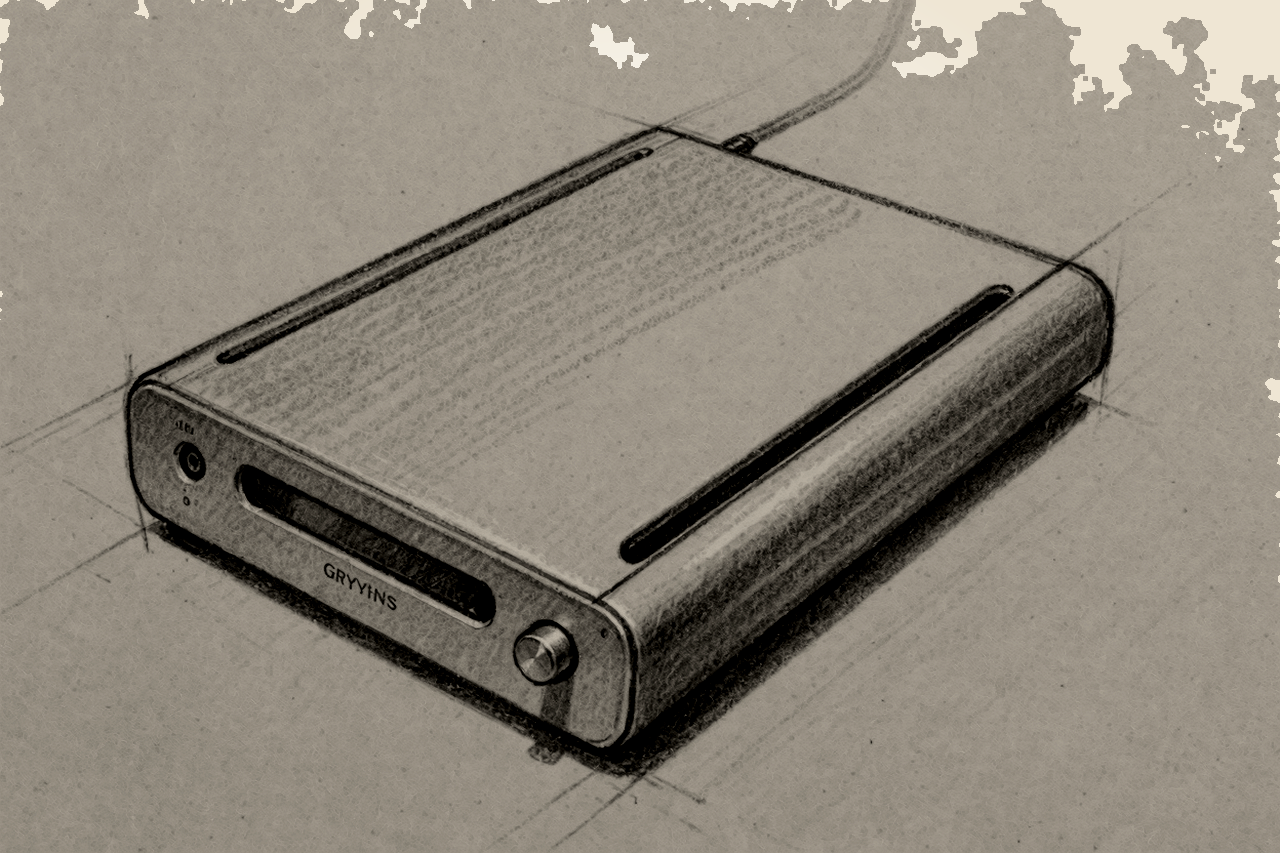
Gryphon Audio Ethos high-end CD player DAC with aluminum chassis and display

The Gryphon Ethos: why a CD player is newsworthy right now

In a market flooded with launches and rumors, where a new streamer or DAC seems to arrive every week, the appearance of the Gryphon Audio Ethos demands a pause and a careful editorial look. Not only because of its price (which sits at a very high level depending on the region[2][4]), but because it poses a direct question to the high-fidelity listener: what justifies, in 2024, dedicating so much engineering and budget to Redbook CD playback, when digital audio is now ubiquitous and nearly every catalogue is a click away? Coverage, beyond the hype or audiophile folklore, requires rigor: separating marketing from fact, and putting into context what might truly change for those who listen to music through the Ethos.

Verified sources: what is known and what is just marketing

A critical review of industry primary sources immediately eliminates certain rhetorical excesses. The Gryphon Ethos may be presented as "the world's best CD player" or "the most beautiful audio component ever made," but both statements belong to the universe of self-promotion and media headlines, not to empirical data[4][6]. What matters is what is actually documented: the Ethos is a CD player and DAC dedicated exclusively to the Redbook 16-bit/44.1 kHz format; it does not support SACD, video functions, or multichannel playback[4][5]. It stands out with a formidable DAC architecture — 16 ESS Sabre ES9038PRO chips, eight per channel in a dual-differential dual-mono configuration — and features independent power supplies for each active circuit[4][5][6]. Any claim that goes beyond this informational border enters the field of editorial judgment or manufacturer’s assertions.

From Redbook to DSD: what it means for the critical listener

Why would someone opt for a player focused on CDs in an era of on-demand music? Technically, the Ethos responds with tools that go beyond physical disc playback. It offers digital resolution up to 32-bit/384 kHz PCM and supports DSD512 through its USB input[4][5] (though DSD support is exclusive to USB; neither AES/EBU nor S/PDIF inputs allow for that format). This range of digital inputs makes it as ambitious a DAC as the Stream Unlimited CD-Pro8 transport mechanism is as an optical reader[4][6]. For the listener, this means the Ethos can be integrated into hybrid systems (networked digital/local Redbook) without sacrificing vintage input or access to the latest in computer audio.

Scalability, power, and dynamics: the real scale — beyond folklore

There is no honest way to literally transfer the scale of a live performance or the dynamic violence of a great orchestra through a home system, but the Ethos aims to maximize the sense of energy and presence via several technical routes: digital filtering with seven selectable curves for PCM and three for DSD, massive capacitor banks (20,000 µF per analog channel), and low-impedance balanced XLR outputs (4.3 V nominal)[4][5][6]. This combination, taken seriously with respect to power supply commitment and DAC conversion, points to an experience where the listener can perceive sustained dynamic range, physically authoritative bass, present vocals, and an unusual degree of spatial stability for the home environment. Of course, any description that goes further (subjective impressions, adjectives borrowed from unverified reviews) would be selling illusions: only reviews from professional sources focusing on engineering and experience are admissible, not verbal magic.

Where the limit lies: what the Ethos does NOT do — and why that matters

Exclusivity also means renouncement. The Ethos does not include a network streamer, does not play SACDs, and does not support DVD, Blu-ray, or multichannel files[4][5][6]. Its reason for being is radical loyalty to compact discs and ultra-sophisticated digital-to-analog conversion, but without making concessions to versatility. Even its high-resolution audio support is more of a digital extra: any use outside physical CD (like a USB DAC) is welcome, but peripheral to the Ethos' essential philosophy. For users seeking a universal hub, this is not the machine; for those who cherish a CD library and want to extract every nuance from Redbook software, the Ethos offers a still-relevant path in the post-physical era.

Materiality, craftsmanship, and chassis: the tangible in the digital flow

It’s not just about what it does, but how it does it: the Ethos is an exercise in Danish precision, with a delta-shaped aluminum and acrylic chassis, hand-assembled, and with a substantial weight of 13.7 kg[4][6]. Anyone who has attended a physical (non-digitized) audition knows that the equipment itself communicates something even when idle: mass, temperature, visual scale. From this perspective, the Ethos turns playback into a deliberate act, emphasizing the body-object relationship that much of networked audio has sidelined.

Listening consequences: a precise editorial translation

For informed readers, the deeper questions remain: Is it justifiable to invest in a a very high asking price player whose technical argument is to push Redbook playback and multichip DAC implementation to their physical limit? The answer depends less on finer specification points than on how much value the listener places on the physical experience, the aura of the object, and the architectural integrity of the sound. Strictly speaking, the Ethos will not reproduce a live concert (no home system can), but according to its specs and architecture — always based on independent review evidence — it may offer stereo imaging, spatial stability, and a sense of physical presence (present bass, locatable voices) that are rare even among reference players[6][3][1].

What should the reader know before considering the Ethos? Editorial conclusion and source note

In summary, the Gryphon Audio Ethos occupies a niche that does not seek easy consensus. Its focus is on CD excellence and digital-analog conversion, with an engineering approach (16 DAC chips, extreme power supply, real-time filter control) that becomes meaningful only if the system and listening environment match its capabilities. The information presented here is based on official sources and independent reviews from specialized press; any claim about "the best sound," "the most beautiful design," or "the ultimate emotion" falls outside the scope of objective fact and into the realm of editorial enthusiasm, not factual verification[1][3][4][6]. As is always the case in true high fidelity: what matters is not what marketing promises, but what can be translated into a tangible experience for the listener based on solid sources.

Contact

Contact LineaSonora

For distribution, brand representation, integration projects or editorial enquiries.

[email protected]