

In-akustik 360° Connectors: The Installation Claim Is Clear; the Sonic Claim Needs a Test
In-akustik’s tool-free 360° connector is a documented installation change. This method-led analysis separates that practical claim from unmeasured cable-performance and audibility claims.
Introduction: Between Audiophile Legend and Objective Fact
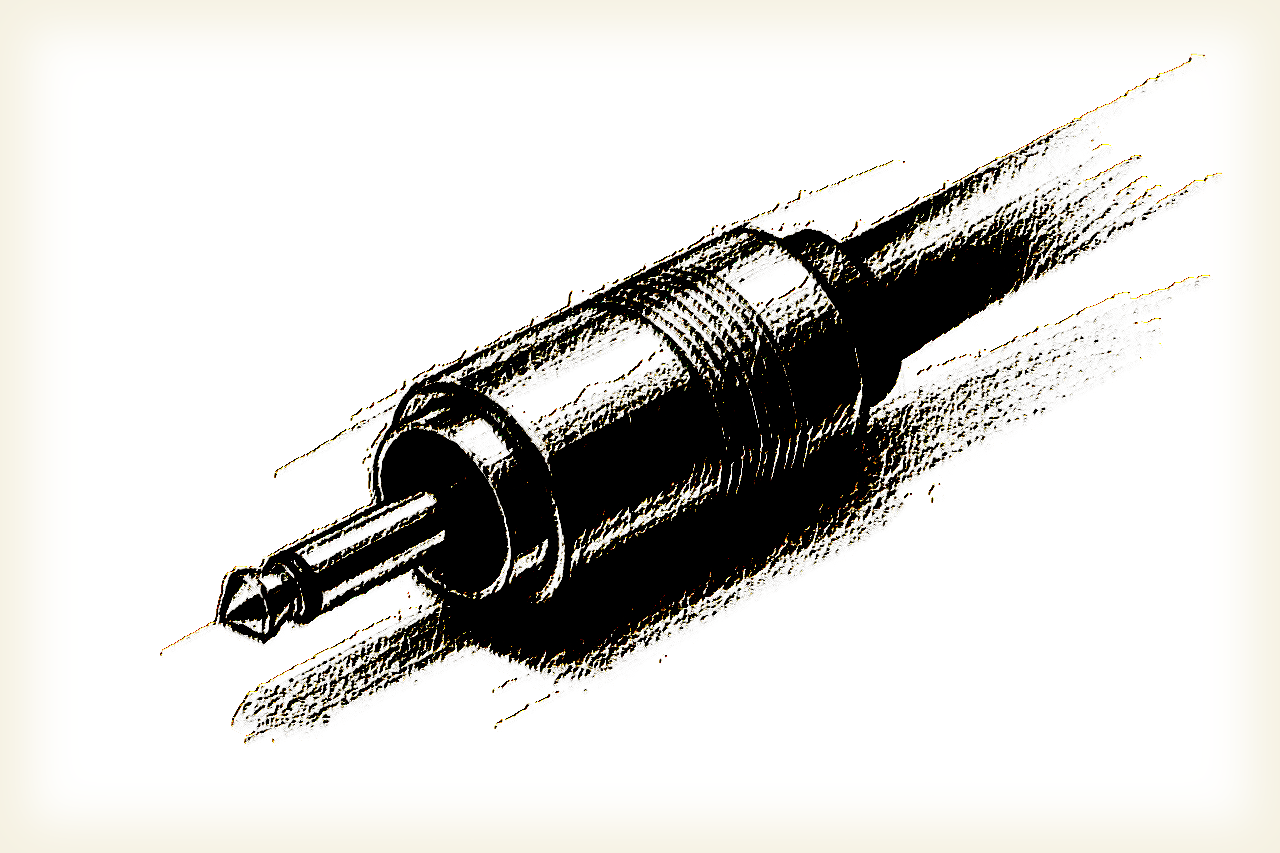
In-akustik’s 360° connector presents two different propositions that must not be merged. Tool-free termination and an adjustable cable exit are observable installation features. A claim that the connector or AIR architecture produces an audible improvement is a separate hypothesis requiring defined samples, conditions and measurements.[1][2]
Evidence boundary: The manufacturer and specialist coverage document construction and installation intent. The current sources do not provide a controlled before/after dataset establishing an audible effect from the connector itself. LineaSonora did not measure the cable or conduct a listening trial.[1][2]
Confirmed Facts: Technical Update and Real Scope
Official and specialized sources agree that In-akustik has introduced a relevant update to its LS-4005 AIR and LS-2405 AIR cables[3][4][2][5]. The defining element is the integration of connectors named 360°, available in both BFA banana and Spade versions. The main stated aim is ease of connection: these new connectors remove the need for tools, allowing attachment with a hand-operated screw system. Additionally, their design enables movement along three axes, which seeks to reduce mechanical stress during installation and accommodate less conventional terminals[3][4][2][5].
The manufacturer documents these practical features on its official website and in its promotional materials[6][2], while specialist publications such as Stereonet and The Ear confirm the basic description of this innovation[3][4]. It should be emphasized that this update is limited to the Reference AIR series, leaving other historic models of the brand untouched—an important distinction for those consulting catalogs or considering upgrades.
Marketing and Technical Reality: Is There Measurable Innovation?
Although the word "innovative" appears frequently in communications and press releases, it is worth clarifying the extent of the technical innovation recognized to date. The tool-free mechanism is an empirically verifiable convenience and, in theory, reduces the risk of damaging terminals or the cable itself during installation. The mechanical flexibility—ease of positioning and rotating the connector in three axes—can also be observed and arguably measured, though none of the sources consulted provide numerical data or official minimum rotation angles or tolerance values.
However, as of now there are no published measurements showing whether this new connector design confers any electrical advantage (for example, lower contact resistance, reduced signal loss, or improved impedance stability) compared to the brand's traditional screw system. Both journalistic sources and the manufacturer limit their arguments to the functional and mechanical aspects[3][4][2][5]; they offer no comparative tests regarding signal transmission, nor response graphs or distortion data directly tied to the connector update. For potential buyers prioritizing system fidelity, this means that the evidence is, for the moment, strictly circumstantial and focused on usability rather than acoustic outcome.
The Air-Helix Architecture: Context and Limits of Applied Physics
Before the arrival of the 360° connectors, the Reference AIR cable series was already notable for implementing the Air-Helix architecture. This arrangement aims to minimize the influence of dielectric materials and provide air insulation for the conductor—a physical approach which theoretically can reduce capacitance and affect the cable's electrical behavior. However, the significance of these effects in domestic or standard listening room scenarios remains debatable, given the relatively minor scale of such differences compared to other system components—amplifiers, speakers, or the room’s own acoustics[1][2].
The prior review in Fidelity Magazine, though preceding the 360° connectors, praised the Air-Helix technology for its apparent transparency and openness, but its conclusion is based on subjective impressions rather than direct measurement data[1]. According to available technical literature, the validity of audible differences attributed solely to the cable or the specific connector shape always requires controlled tests—ideally double-blind and repeatable. To date, none of the sources accompany In-akustik’s connector update with laboratory signal transfer results or noise measurements introduced by the system.
What Changes for the Listener and System Integrator?
The tangible consequence for those listening to or installing updated Reference AIR cables is primarily practical: mounting convenience and the ability to rotate and position the connectors help avoid unwanted tension on speaker terminals and enclosures. This can be especially advantageous in setups where space behind the speaker is limited or where inputs have unconventional shapes. The ease of swapping cables or modifying test systems also becomes relevant in recording studios or environments where regular experimentation is standard.
There is no verified evidence that these mechanical advantages directly affect perceived sound character, stereo image, soundstage depth, or signal integrity beyond a reasonable operational range of contact and conductivity. As long as the mechanical connection remains stable and secure, electrical transmission should be indistinguishable among certified quality systems. Without laboratory data in support, the universal advice of measured skepticism applies: when an upgrade affects ergonomics and not the underlying conductive pathway—at least according to the published information—it is prudent not to expect auditory revolutions, but rather improvements in handling and safety.
Zone of Uncertainty and Paths for Comparison
Premium cable manufacturers often introduce product launches with claims enthusiastically picked up by forums and publications, but the purpose of methodical scrutiny is to distinguish the verifiable from the desire for novelty. In the case of Reference AIR with 360° connectors, several uncertainties persist. In the specialized sources reviewed, no comparative measurement sets between the new and the previous connector systems have been published. Nor, as of closing, is there laboratory data on thread system wear resistance versus screw types, or testing of micro-arcing due to repeated movement or variation under prolonged load.
For those seeking a proven improvement in signal purity, the reliable approach is still to request from the manufacturer or independent labs measurement tables under standard protocols (such as IEC 60268-2). Absent such data, what can objectively be attributed to the In-akustik update is increased handling convenience and reduction in physical stress—factors mainly relevant in complex installations or where components are changed frequently, but not necessarily in the final audible result.
Verdict: practical claim supported, sonic claim unresolved
The update to the In-akustik Reference AIR cables, with their new tool-free 360° connector system, represents a noteworthy practical advance in terms of installation and handling. However—and this is crucial—claims relating to improvements in sound, signal transfer, or "innovation" in the physical sense currently lack support in the form of published laboratory data or acoustic testing[3][4][2][5]. The Air-Helix architecture remains the brand’s real technological hallmark, while the leap to the new connectivity seems, for now, a sound ergonomic strategy rather than a breakthrough in the laws of electrical transmission.
The connector can be assessed as a usability change without invoking an audio myth. Any stronger conclusion needs the compared assemblies, electrical measurements, level-controlled listening conditions and an audibility threshold stated in advance. Until those exist, installation convenience is supported; sonic superiority remains unresolved.