
News

Marantz Model: The Technical Question That Matters Before the Excitement

The Marantz Model 70 and CD 70 arrive as a strategic renewal at the entry level of Hi-Fi. Beyond initial excitement, what do verified sources reveal about their real capabilities, limitations, and their role in the system context?

  • hifi-pig
  • speakers
  • product-launch
  • marantz-model
  • amplifier-and-marantz-cd
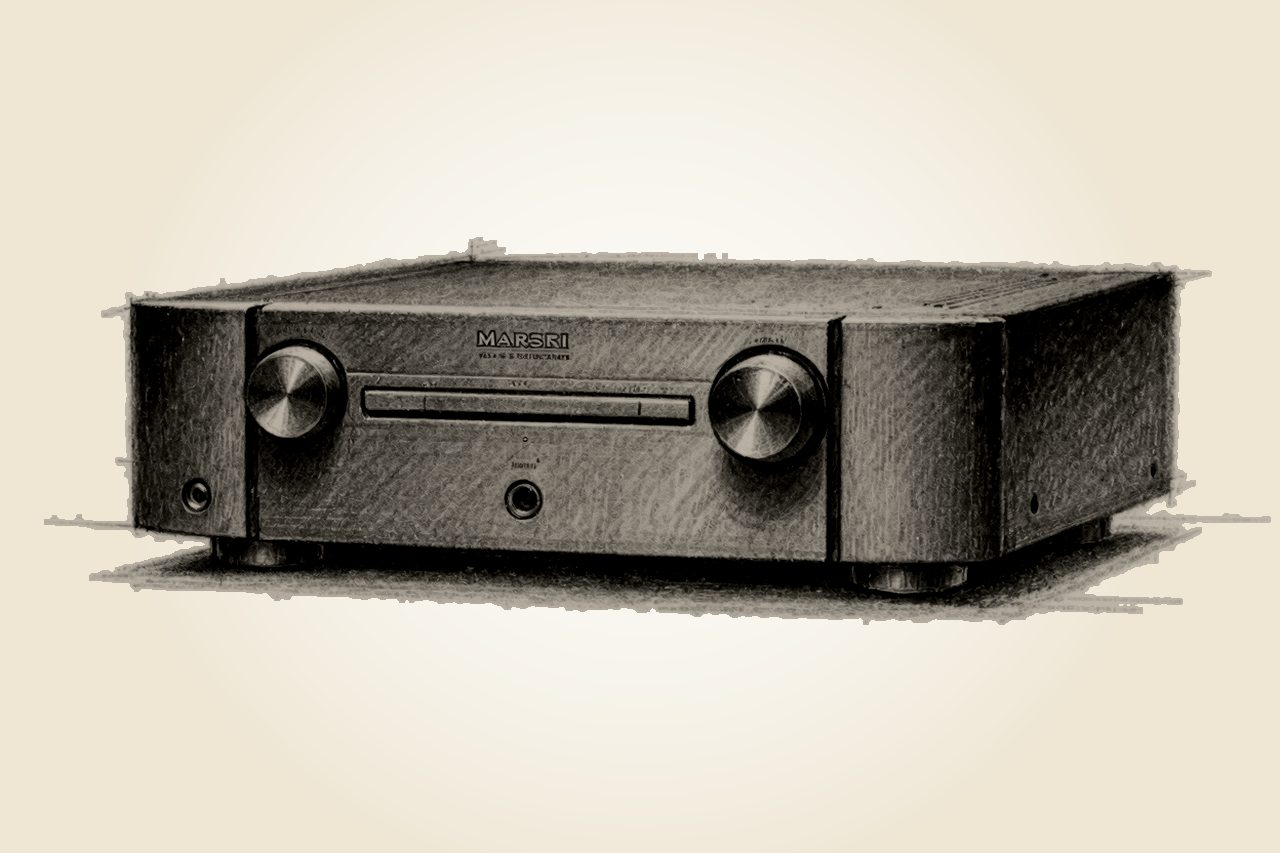
Marantz Model 70 integrated amplifier and CD 70 CD player angled product shot

Introduction: What Lies Beyond the Announcement?

The return of Marantz to the entry-level Hi-Fi conversation with the new Model 70 and CD 70 has sparked anticipation in a market saturated with promises. Beyond the initial allure of the design or the technical figures on the product sheet, an essential question persists: What happens when we bring these offerings into real listening, in specific rooms, with the constraints and aims of diverse home systems? In this article, we break down verifiable facts through primary sources, separate specification from marketing, and aim to inform a demanding reader’s decision before excitement or skepticism takes over.

What’s Announced: Model 70 and CD 70, a Targeted Renewal

The Marantz Model 70 (integrated amplifier) and the CD 70 (CD player) represent the natural evolution of the PM6007 and CD6007, adopting a "full-width" design approach and claiming the brand’s technological heritage at the entry level. Both products were officially announced on July 15, 2026, with general availability expected a month later, except in North America where the Model 70 will not be released[1][3]. Marantz confirms via official channels that the amplifier delivers 50 W RMS into 8 Ω and 65 W into 4 Ω per channel, employing a class A/B topology with current feedback and the HDAM technology, a differentiator compared to more conventional solutions[1][3][5].

For the CD 70, the focus is on digital versatility: it not only plays CDs, but also enables USB-A playback of FLAC and DSD files, using the same advanced DAC platform as the Model 70, plus a dedicated headphone amplification circuit[3][5].

Who Is This Refresh For?

The figures and messaging position these models towards enthusiasts seeking a "complete" entry-level solution, but with long-term intent and connectivity for 2026 rather than 1996. Those looking for a traditional price-to-feature value might find alternatives; here, Marantz is targeting users who, even with modest bookshelf speakers or previous brand electronics, want to evolve their system with solid bridges to TV and streaming, without abandoning physical media.

The breadth of input options and internal processing (Bluetooth aptX Adaptive and HD on the Model 70, HDMI ARC, updated MM phono) suggest the intention is to create a system centerpiece that can integrate with a variety of sources and withstand evolving formats[1][5]. As always, the promise of simple integration and linear quality requires analysis in light of real-world room limitations, associated loudspeakers, and the listening and connection conditions. In small to medium-sized rooms, with moderately sensitive speakers and listening distances up to 3 meters, the 50 W output may be sufficient, but experiences can vary dramatically in larger spaces or with higher SPL requirements.

The Problem Addressed: Integration, Connectivity, and the Digital Transition

On paper, the Model 70 succeeds by anticipating the current context, where the coexistence of streaming, TV, and physical media is the norm. The inclusion of HDMI ARC sets it apart from many competitors that still treat TV integration as an afterthought rather than a priority. This is relevant: in a domestic environment, proper handling of TV signal (without introducing noise, without noticeable latency, and with logical power management) is often a system-level, not just product-level, concern[1][5].

Marantz's decision to include bidirectional Bluetooth would be irrelevant if limited to the SBC standard, but support for aptX Adaptive and HD opens access to higher dynamic range wireless connections and, in theory, lower perceived compression[1]. Nevertheless, no Bluetooth standard can match the experience of a quality wired source under ideal room conditions, and it should always be viewed as a convenience option rather than a reference point.

Credible Differences Versus the Category: Is There Anything Distinctive?

As an entry-level amplifier, the Model 70 positions its power output in line with the standards (50 W/8 Ω), eschewing inflated marketing figures but also not promising unlimited reserves: what is claimed is what can be realistically expected with reasonable loads (medium-high sensitivity speakers, typical home use)[1][5]. Here Marantz does not innovate on power but on how it integrates:

  • HDMI ARC: Rare in this price point, key for systems integrating with TV.
  • Phono MM with HDAM: Suited for moving magnet cartridges, though as always, the quality of the experience depends on the cartridge, cabling, tonearm mass, and grounding in the room.
  • Advanced integrated DAC: A potential benefit for modern systems, but final sound quality will still depend on upstream conversion and electrical isolation from noise sources.
  • Bidirectional Bluetooth (aptX Adaptive/HD): A nod to the hybrid user, useful for wireless headphones, but without pure audiophile pretensions.

The CD 70 gains relevance in today’s context as it reintroduces physical media without relegating it to secondary status: its DAC integration and dedicated headphone output may be useful for users alternating between speaker listening and private listening sessions.

Risks of Hype, Model Confusion, and Marketing: What Should Be Clarified

Despite the transparency of specifications in primary sources[1][3][5], confusion between the Model 70 (integrated amplifier, 50 W, HDMI ARC) and the Stereo 70s (stereo A/V receiver, 75 W, six HDMI ports) is notable. Many secondary sources and online videos conflate these products, creating a real risk of mistaken expectation and incorrect purchases for those unable to distinguish between an audiophile integrated amplifier and a home cinema receiver[2][4]. In particular, the Model 70 is not intended to be either A/V or multizone: it is a two-channel integrated for music, with HDMI ARC solely as an audio return channel, not a hub for video or multi-format switching.

On the marketing front, brand-specific technologies (HDAM, linear circuits, premium finishes) may be presented as irrefutable arguments. It is wise to remember that, though HDAM implementation has received recognition for reducing distortion and improving transients, its real effectiveness depends both on overall system design and on its synergy with loudspeakers, the acoustic environment, and handling of expected dynamic peaks in the listener’s chosen music. Frequency response specification (5 Hz – 50 kHz) and signal-to-noise ratio (110 dB) represent theoretical performance; the practical utility of these ranges will seldom be realized in standard domestic settings, especially with modern recordings that rarely exploit the full spectrum[5].

What Should the Reader Know Before Deciding?

Based on the above, here are fundamental questions before enthusiasm sets in:

  • Loudspeaker compatibility: Will your speakers’ sensitivity and impedance allow you to make full use of the 50 W range at your usual volume without distortion or fatigue?
  • Listening space: Does your room (size, absorption, reflections) align with what the amplifier can deliver, or will there be limitations in sound pressure and authority in the bass?
  • Sources and connection paths: Will the Model 70 serve as a true hub, or is there overlap with other DACs, streamers, or phono preamps?
  • Distinction from adjacent categories: Are you seeking a musical amplifier or an all-in-one A/V unit? The Model 70 is not a receiver nor a multi-format manager: it prioritizes the traditional stereo music path, with some openness to convenience and TV use.
  • Durability and future integration: Are the HDMI ARC and Bluetooth support designed for current and future technologies, or could they become inadvertently obsolete if your home ecosystem changes?

The informed reader should start with the fundamental premise: no component operates in the abstract, but in an acoustic environment, with specific loudspeakers, and with expectations that may be far removed from the technical sheet.

Conclusion: Uncertainties, Balance, and a Call for Caution

The arrival of the Marantz Model 70 and CD 70 provides a nuanced take on entry-level integrated audio, with contemporary connectivity and respect for their technological heritage[1][3][5]. But every system promise should be weighed against practical questions and an honest review of each room’s needs and listening profile. Between specification, marketing, and real experience lies a decision space where caution is worth more than excitement for novelty. As always, before making a decision—especially when the narrative seems irresistible—it is wise to demand a critical listening session and be attentive to the core synergy: technical sheet, room, and loudspeaker are never separate parts.

Contact

Contact LineaSonora

For distribution, brand representation, integration projects or editorial enquiries.

[email protected]