

Now Playing: Why This Recording Deserves an Audiophile Listen
The 'Now Playing' selection, linked to What Hi-Fi? and specialized companies, demonstrates how certain recordings teach us to demand more from our audio systems. But how are these recommendations validated, and what changes for the critical listener when we trust real sources and not just internet echoes?

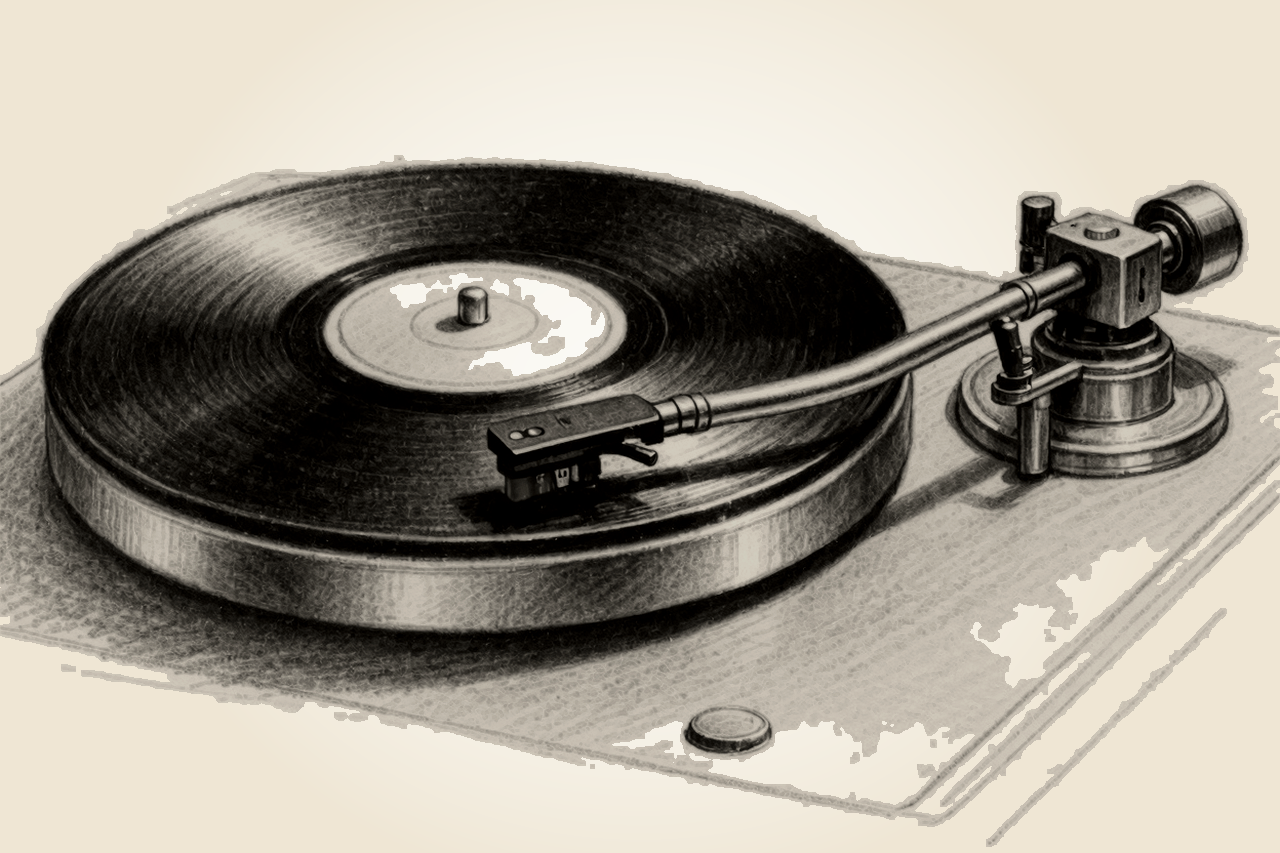
The Idea Behind 'Now Playing': When a List Is an Invitation, Not an Absolute Truth
The act of listening is reinvented every time a publication like What Hi-Fi? proposes an allegedly definitive list of songs to "test" hi-fi equipment. This is the case with Now Playing, where the seven suggested songs act as a sort of navigational chart for the listener: not as immovable rules, but as critical tools designed to push our ears and systems to the limits of their technical and musical capabilities. However, this editorial convention is surrounded by a unique phenomenon: sources differ regarding the official status of the selection, and consensus tends to emerge more from collective word of mouth and common practice than from a single, institutionalized declaration.[2][4][5]
Behind the List: Sources, Circulation, and the Risks of Misinformation
A review of the available research shows that there is no single source or central What Hi-Fi? article that has formally canonized exactly these seven tracks with official authority. Instead, the information relies on the convergence of several leading entities—such as Bang & Olufsen or enthusiast forums—and suggests a spontaneous convergence: the same songs often appear on different expert-curated lists, lending them practical robustness, though not absolute verification.[2][4][5] At this point, the question of validity becomes an exercise in tracing: can we trust recommendations that come from circulation among multiple channels—official and community—and that are repeatedly highlighted by specialists and passionate critical listeners?
Defining the Repertoire: Seven Tracks, Seven Listening Challenges
Despite the lack of a single source, the repeated inclusion of the same tracks grants them an almost liturgical status in critical listening rituals. Among the recurring recordings are:
- "Teardrop" by Massive Attack: a track where an electronic atmosphere weaves together with a deep and complex bass line. Its sonic structure requires a system to render bass without blur or confusion, creating a three-dimensional space where details emerge within a carefully dosed haze.
- "Shine On You Crazy Diamond" by Pink Floyd: with its expanding textures, synthesizer and guitar layers, and subtle detail placement, this opening of Wish You Were Here is itself a trial of width and soundstage depth. The mix’s transparency lets one distinguish every layer without losing a sense of total atmosphere.
- "A Day in the Life" by The Beatles: more than a nostalgic reference, its bold stereo assembly and the dynamic extremes between Lennon and McCartney’s sections serve as a test of a system’s ability to maintain continuity and scale, blending intimacy with orchestral grandeur.
- "I've Got You Under My Skin" by Diana Krall: the focused central vocal and meticulous instrumental accompaniment make this version a test for imaging precision and the faithful reproduction of jazz phrasing and room ambience.
- "Billie Jean" by Michael Jackson: the combination of rhythm, depth, and synthetic layers sets another frontier: it demands separation and control, ensuring that the pulse doesn't swallow details or lose the anchoring rhythm of its famous bass and drum line.
- "Come Away with Me" by Norah Jones: its intimate atmosphere and tonal balance among voice, piano, and double bass appeal less to spectacle and more to capturing the warm nuances of the midrange and the sense of a close studio performance.
- "Hotel California" by Eagles: truly a multigenerational touchstone, this recording is celebrated for its layered soundstage, crisp acoustic introduction, and orchestral build, providing a way to gauge how a system manages the balance between energy and detail throughout the track.
What Changes for the Critical Listener?
Audiophile culture is not simply about having superior equipment or listing abstract parameters: above all, it is a practice of attention. The proposed selection, beyond any official endorsement, points toward a potential method for those who wish to train their ear, understand timbral differences, grasp the relationship between spatiality and instrumental articulation, and notice when a nuance resonates naturally and when it is lost.
By attending, for example, to the way the introductory percussion in "Teardrop" spreads toward the edge of the stereo field, or the subtle way Norah Jones' voice settles among the instruments, the listener discovers not only technological strengths and weaknesses but also how a recording can be a tool to relearn listening and cultivate personal artistic judgment, with references and context.
The Risks of Marketing and Misattributed Claims
However, every act of curation brings with it some editorial risk: in this case, the tendency to present these songs as if they were a unique truth or technical dogma, when in reality they are the practical expression of a convergence of expert opinions and collective passion. Neither Bang & Olufsen, nor What Hi-Fi?, nor the forums can claim absolute authority over these seven tracks as 'the songs to test Hi-Fi'.[2][4][5] Nor is there any technical measurement that objectively supports their primacy—the authority lies instead in musical consensus, decades of practice, and the capacity to foster active listening beyond any spectrogram.
For this reason, it is advisable that readers not confuse legitimate editorial sources with the often uncritical echo of social networks or viral lists on TikTok and YouTube, whose viral nature multiplies suggestions but rarely provides verifiable evidence.[1][3][6] Hence the importance of citing direct sources—when available—and distinguishing between professional suggestions, advanced user recommendations, and pure marketing, which often tries to attribute depth where there is only trend.
A Repertoire for Listening and Cultural Discussion
The value of 'Now Playing', viewed through the lens of source verification and listening culture, lies in its role as a listening activator, not a universal arbiter. These seven recordings are, above all, resources—touchstones and checkpoints for those who want to understand how some recordings illuminate the space between technology and art, between technical demands and musical enjoyment. The informed listener benefits from recognizing that true listening education lies in a multiplicity of references, in critical awareness, and in returning to music with new questions, not prefabricated answers.
No matter how validated, the repertoire is an opportunity: not so much a destination, but an invitation to investigate how each recording responds to the uniqueness of a real system, an acoustic space, and the listener’s own memory. Ultimately, audiophile practice flourishes when albums and experiences are not repeated as formulas, but endure as acts of critical attention and, above all, as ways to enjoy and understand music through—and beyond—any device.