

Oscar Peterson, Mack Avenue, and a Soundstage That Demands Context
Mack Avenue Music Group and Two Lions Records announce World Tour, a limited edition dedicated to Oscar Peterson. More than just a collector’s item, the interest lies in how five live performances and a television session can expand the public image of an already canonized pianist.

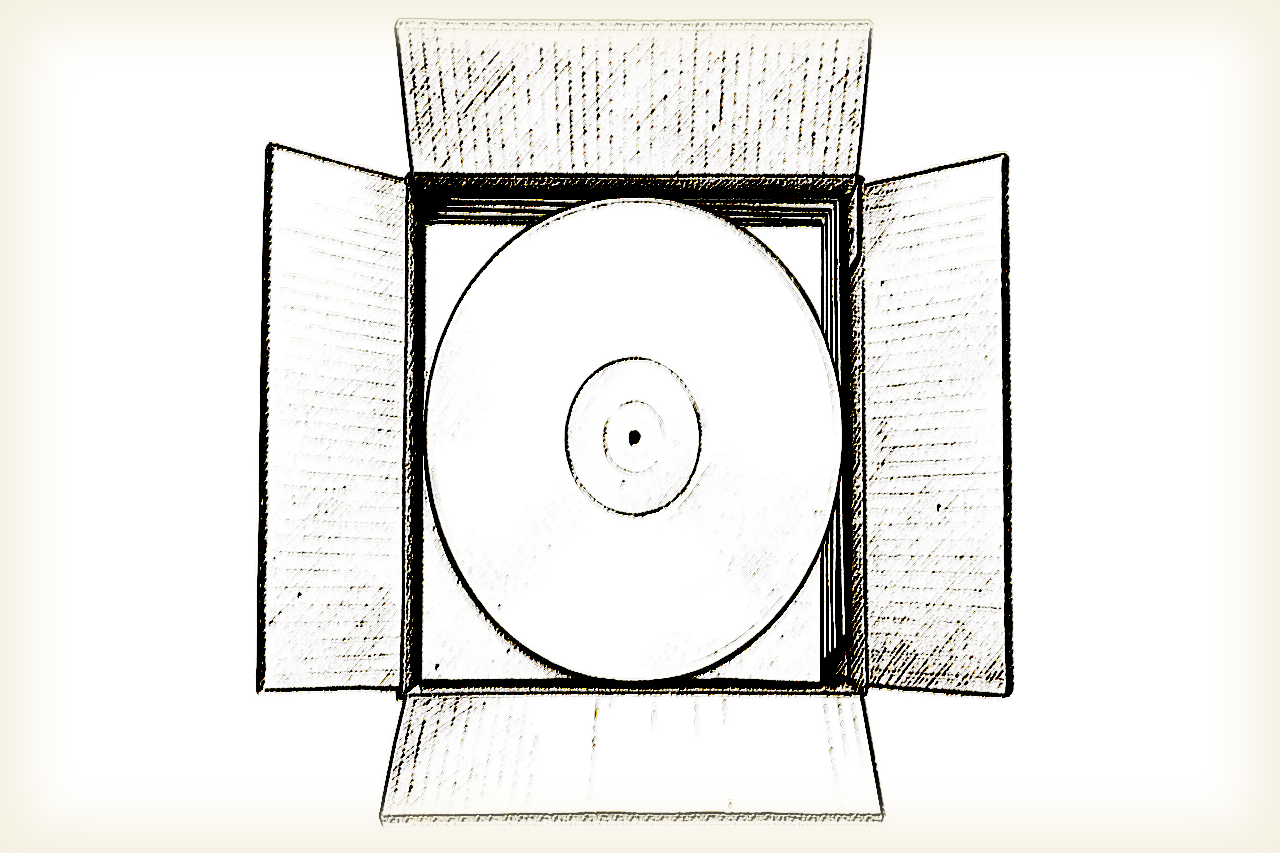
The news is not just that Mack Avenue Music Group and Two Lions Records are preparing a box set dedicated to Oscar Peterson. The most interesting editorial consequence lies elsewhere: World Tour invites us to listen to the pianist not as a monument to virtuosic jazz, but as a musician in motion, presented before different audiences, in various halls, with different collaborators and recording formats. According to available sources, the release is scheduled for August 28, 2026, as part of the centenary celebrations of Peterson, who was born in 1925.[1][2] In a market where prestige reissues can easily become fetish objects, this box is most intriguing for its potential to restore a sense of movement to a figure often too quickly summarized as speed, elegance, and authority.
A Catalog Announcement, but Not a Minor One
The verified details outline an ambitious object: a limited edition of six 180-gram vinyl LPs, with an alternative four-CD version, dedicated to Oscar Peterson material described by sources as previously unreleased.[1][3][4] The box set includes five previously unpublished live performances and a studio session for television, with a total running time announced at over four hours.[1][5][2] It is accompanied by a 48-page hardcover book featuring photographs, archival materials, poems and memories from family and colleagues, plus a CD version with a 20-page booklet.[1][4][2]
It is important to distinguish, from the outset, between a verifiable fact and a cultural promise. The format, scheduled date, partnership between Mack Avenue Music Group and Two Lions Records, and general structure of the box set are all supported by official sources and specialized music press.[1][3][4][2] The idea that this is a definitive or expansive collection belongs more to the launch's marketing rhetoric than to any critical conclusion. This may be an important release; however, it is not yet appropriate to treat it as a finished musical event without knowing the exact sequence of the recordings, their sonic condition, and the applied restoration or mastering work.
Peterson in Motion: The Value of the Live Setting
The key word here is tour. Not because the title automatically turns the box into a complete map of Peterson’s world, but because five live recordings change the kind of attention listening requires. With a studio album, listeners usually seek control: balance, cleanliness, the perfect take, a fixed phrasing. In a live performance—even when exceptionally well recorded—other aspects emerge: the breathing of the room, audience reactions, energy building before a solo, and the way the trio or ensemble negotiates form in real time. If the edition delivers what it promises, its high-fidelity interest will not be to demonstrate bass or treble, but to reveal the relationship between rhythmic drive, piano attack, and recording space.
Peterson was a pianist marked by almost architectural physical clarity: each line could seem perfectly drawn, yet his music is not exhausted by its cleanness. The risk in some compilations is to cast him as a flawless athlete. A collection of live performances, on the other hand, can restore friction: tempos that breathe differently, cues dependent on mutual listening, applause that is not mere embellishment but part of the document itself. The box set features musicians linked to different chapters of the Peterson universe, among them Ray Brown, Niels-Henning Ørsted Pedersen, Joe Pass, Louis Hayes, and Mary Lou Williams.[1][5][2] That list alone suggests contextual variety, although it does not yet authorize any specific musical claims without hearing the tapes or having a full breakdown of each performance.
What Changes for the Hi-Fi Listener
For the LineaSonora reader, the practical question is not whether six LPs take up more shelf space than four CDs, but what kind of listening experience each format proposes. The 180-gram vinyl statistic is a manufacturing detail, not an automatic guarantee of superior sound; this reminder is worthwhile since record weight is often used as an overly convenient commercial shorthand. What matters is the original source, transfer, editing, cutting, pressing, and the condition of the tapes or files used, information inadequately specified in currently available research materials. For this reason, any statements about soundstage, noise floor, real dynamics, or tonal naturalness must be suspended until technical documentation or verifiable critical listening emerges.
What can be anticipated, without pretending to have heard the release in advance, is the kind of questions World Tour should prompt in a well-adjusted system. With Peterson’s piano, the right hand doesn’t merely sing lines: it strikes, articulates, and distributes accents with precision that can reveal whether a system is flattening the attack or preserving the contour of each phrase. In interaction with a bassist like Ray Brown or Niels-Henning Ørsted Pedersen, the interest is not merely in bass extension, but in the continuity between note, wood, pulse, and space. In a dialogue with Joe Pass, the clarity between piano and guitar matters less as a spectacular image and more for legibility of intent: who is accompanying, who is responding, who leaves space.
The studio session for television adds another dimension. A TV studio is not a club or a concert hall: it may have a drier acoustic, an instrumental setup dictated by cameras or production, and a different relationship between presence and ambience. If the box retains those contrasts alongside the live shows, listeners receive a lesson in sonic culture: the same pianist does not occupy space identically before an audience as when performing for a media recording. Here, high fidelity serves the music in a subtle way: not to embellish the document, but to preserve its original distinctions.
Centenary, Archive, and Family Memory
Peterson’s centenary is an obvious framework, but it should not be used as a sentimental excuse. The best commemorative reissues don’t celebrate an artist through ceremonial repetition, but by reopening questions about their work. The announced editorial material—a 48-page book, photos, archive, and recollections from family and colleagues—may help position these recordings within a wider human and historical context.[1][4][2] According to attached research, Kelly Peterson and Celine Peterson are named among those linked to project notes or memoirs, though this should be treated cautiously without access to the final booklet or full official credits.
Peterson belongs to a category of musicians whose technical fame may obscure their narrative depth. It is not enough to say he played a lot and very well. The question is how he structured time: how an introduction became conversation before turning into momentum; how a ballad could be sustained without losing richness; how tradition, swing, blues, and pianistic brilliance integrated into a discourse that did not fragment into showmanship. A box set with material spanning nearly three decades, as indicated by sources, might allow one to observe changes in approach over time.[1][2] But this is, for now, an editorial hypothesis, not a conclusion.
What’s Verified, What’s Promotional, and What’s Pending
As news, World Tour is reasonably well supported: the announcement appears in Tracking Angle and Wildfire Music on June 1, 2026, with the core details matching Mack Avenue’s official pages.[1][3][4][2] Front View Magazine also presents the main aspects of the launch, though research notes it does not display an explicit date.[5] The Instagram sources cited in the survey may indicate public communication, but should not be relied upon for technical or substantive editorial claims.
For a purchasing or listening decision, readers should keep three things in mind. First: format and general content data are supported by official and specialist sources. Second: terms like limited, unreleased, or expansive collection require nuance; limited depends on print run and actual availability, unreleased is tied to the label’s statements and associated communication, and expansive is a value judgment, not a fact. Third: essential details remain missing for demanding listeners, such as a complete list of performances, source provenance, restoration criteria, mastering credits, and pressing conditions. Without these, it is only responsible to discuss documentary and musical potential, not guaranteed sonic superiority.
Listening Beyond the Object
The temptation with a box set like this is to see it as a monument: six LPs, a book, archive, centenary, illustrious names. But Peterson himself, if anything, showed that musical monuments are dismantled in real time. One phrase is answered by another; the bass does not accompany from the background, it partakes in the conversation; the audience does not certify greatness, it registers the temperature of a particular night. If World Tour succeeds in bringing such distinctions—different venues, recordings, decades, companions, modes of presence—its value will lie less in the possession of the object than in the possibility of hearing Oscar Peterson once again in motion. This is the truly interesting test for any soundstage: not artificial stereo width, but a musician emerging inside their own context.