
News

Pacific Audio Fest: A Soundstage Test More Interesting Than It Seems

Pacific Audio Fest returns in 2027 championing a music-focused listening experience, with verifiable sources and a less industrial approach: this is what is truly changing for the discerning audio scene.

  • enjoy-the-music
  • music-culture
  • show-event
  • pacific-audio-fest
  • focused-premium-audio-experience
Pacific Audio Fest 2027 auditorium with listeners and soundstage focus

The Listening Experience at the Heart of Pacific Audio Fest

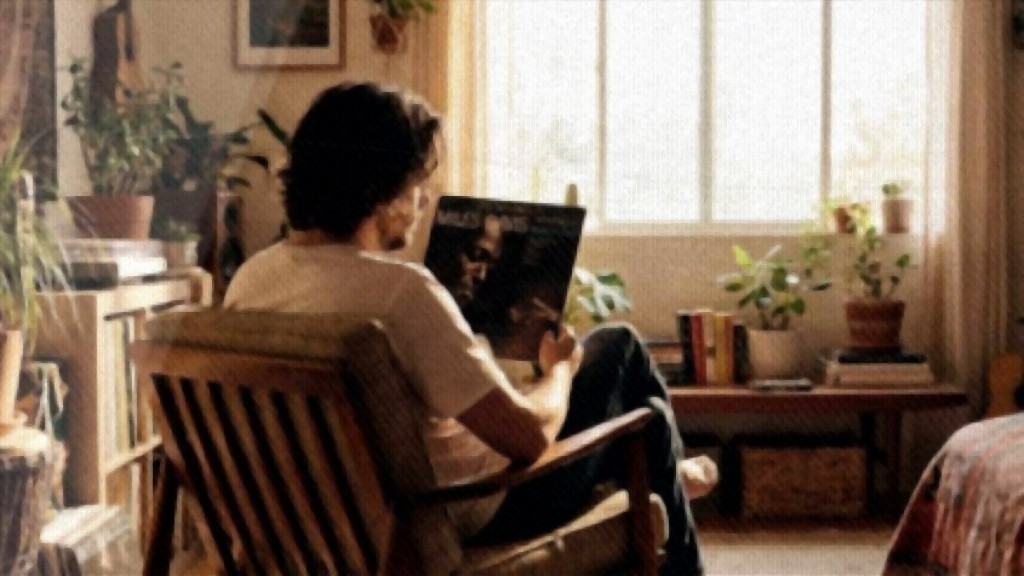
In a calendar crowded with audio shows that frequently repeat products and technical rhetoric, Pacific Audio Fest 2027 proposes a subtle yet meaningful course correction. It is not just another opportunity to see shiny cables or monumental speakers; the commitment to a "Focused Premium Audio Experience" goes beyond the equipment and centers listening itself, reclaiming music and its listeners as the essential focus [1][5].

Dates, Venue, and Focus: What Has Been Confirmed

The confirmed details leave no room for speculation: Pacific Audio Fest will take place from January 15 to 17, 2027, at the Hyatt Regency Lake Washington at Southport in Renton, a part of the greater Seattle area. This change of location—set by the lakeside—reflects a deliberate search for quality environmental and acoustic conditions for listening spaces, contrasting with the merely functional sites of other similar events [1][4][5]. According to official sources and specialist media, the event is paused in 2026, making 2027 the relaunch explicitly aimed at music lovers and professionals interested not only in gear but in the living context of music [1][4][5][7].

What Sets This Show Apart in Practice?

The organizers’ narrative repeatedly emphasizes a sense of reunion—and perhaps challenge—regarding the routines of the “audio industry.” The Festival is driven by the same exhibitors and music lovers, aiming to prioritize a “music lover’s experience”, translated into directed listening sessions, live concerts, and an atmosphere less dominated by the demo-commercial logic [1][5]. Here, music is not the excuse: it is the centerpiece and reason for being.

In practice, this means fewer revolving stands and more proposals that explore deep listening: the confrontation between a recorded album in controlled conditions and live performed music; approaching well-known repertoires under the premise of revealing nuances, dynamic tensions, room textures, and the narrative continuity of a well-chosen recording or a set reimagined in real time.

What Does This Really Change for the Listener?

The consequences of this approach are less trivial than they appear. When listening is the framework and not merely a pretext, new possibilities emerge—to test not only hardware, but also the interpretation of recorded repertoire itself. The goal is not for each passage to sound louder or more "impressive", but for the album, the voice, or orchestra to be placed anew before the listener in all its complexity. In this setting, moving from a chamber performance (for example, a live Debussy movement) to a benchmark recording of the same work enables the listener to compare how space, texture, and levels of intimacy—or distance—transform the experience, and what the system reveals in each scenario.

By emphasizing musical sessions, Pacific Audio Fest offers the chance to reevaluate canonical recordings (think Miles Davis's "Kind of Blue", or the phrasing on a fado vocal recording) through a lens different from the usual showroom: listening no longer aims to convince, but to rediscover the internal logic of records and their relationship with the physical listening space. Audience cues, atmosphere, reverberation, and realistic dynamics cease to be a commercial check-list and instead become part of the pleasure and culture of listening.

From Sales Culture to Listening Culture

This shift, documented and highlighted in the event's communications and confirmed by specialist publications, does not mean the commercial exhibit disappears, but its significance is redefined. By making the “Focused Premium Audio Experience” an explicit goal, technical aspects (the latest DAC, exotic speakers, tailored rooms) become tools, not an end in themselves [4][5]. Critical listening, as Pacific Audio Fest positions it, means recognizing music as the subject, with equipment serving as a medium for delving into detail—the intentional phrasing of a folk singer, the interaction of the rhythm section in a live jazz set, or the microdynamics of a reference symphonic recording.

Thus, the event speaks to both those seeking system upgrades and those wishing for a more conscious approach to their own records, something rarely prioritized by major showrooms or electronics fairs. Instead of monochromatic auditions of excerpts, attendees can (according to official and media reports) experience full concerts or guided sessions that intertwine repertoire with audiophile listening [1][4][5].

Verification in a Sector Saturated with Claims

In the audio event and product landscape, differences between promise and reality often hinge on hard-to-verify claims. In the case of Pacific Audio Fest, the most essential facts are supported: dates, location, format, and focus have all been confirmed by the festival's official site and leading independent audio media [1][4][5]. While motivational language exists—such as the "emotional power of great recordings"—this is presented by organizers as a cultural aspiration, not an empirical measure, to be understood as an aesthetic framework for the event, not as objective data [1][4][5].

For this reason, any interested reader—whether an experienced listener, hi-fi professional, or simply a curious fan with favorite records—can consult direct sources to verify the program, spirit, and exact location, without relying solely on usual marketing rhetoric [1][4][5]. The value of Pacific Audio Fest, at least in terms of what is verifiable, lies precisely in its intent to place listening—and the cultural intelligence of music—at the center of the experience.

Closing the Distance: Why Pay Attention to Pacific Audio Fest?

Ultimately, the interest of Pacific Audio Fest as an event lies less in its promise of technical novelties than in the cultural movement it represents: shifting the axis from industry to listener, from product to experience, and from demo to full musical immersion. The January 2027 edition brings the audiophile proposal from the margins to the foreground, opening the door to a scene where records are relearned as shared experiences, in context and real dynamic tension.

For those who see equipment not as the end, but as the gateway to a renewed relationship with music, Pacific Audio Fest creates the optimum occasion to observe—and perhaps rediscover—what it means to truly listen: not just comparing hardware, but perceiving meaning and the variety of the audible world. This is where the festival gains significance as a cultural episode and a benchmark for those who see high fidelity not as a technical goal, but as an exercise in attention. Its relevance to the critical reader lies here: the potential for every album to become a new territory for exploration and for each gathering, even at a fair, to transform into a celebration of the fullest possible listening experience.

Sources: pacificaudiofest.com, The Absolute Sound (22/06/2026), Enjoy the Music (07/07/2026)

Contact

Contact LineaSonora

For distribution, brand representation, integration projects or editorial enquiries.

[email protected]