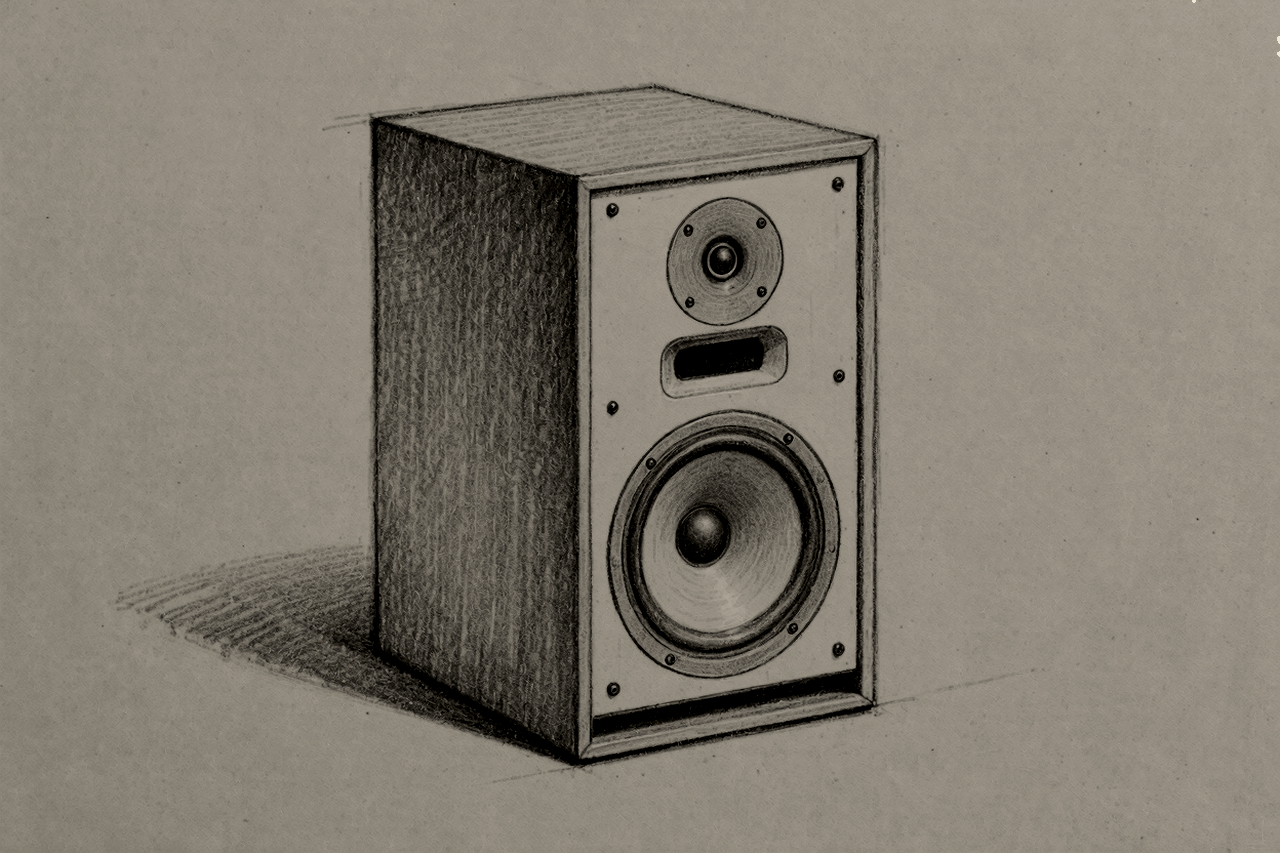

Simco Audio Simco ONE Loudspeaker: Technical Essentials, Verification, and Real-World Context
The Simco Audio Simco ONE loudspeaker stands out for its horn loading and high sensitivity. We review the verifiable facts and separate marketing from real specifications: what does its design mean for the room and the demanding listener?
The Challenge of Accurate Coverage: Verified Specifications and Acoustic Context
The appearance of the Simco Audio Simco ONE Loudspeaker in international media has sparked debate due to its horn-loaded approach, high sensitivity, and position at the pinnacle of the passive two-way loudspeaker market[1][2]. However, beyond initial excitement and press reviews, discerning listeners face the challenge of distinguishing verifiable technical information—essential for system decisions and placement—from marketing promises or subjective impressions unsupported by independent measurement. What can the Simco ONE truly contribute to a real system installed in a demanding domestic room? Here, we analyse, using public documentation and established acoustic principles, the features that set it apart and the limits of current knowledge.
Verified Specifications and Materials: Key Points for Real Synergy
The Simco ONE is objectively a two-way, horn-loaded loudspeaker, with an official sensitivity of 95 dB at 2.83 V/1 m[1][2][3]. This value is crucial for amplifier pairing, as it implies that even with low power stages—for example, single-ended tube amplifiers between 4 and 15 W—reasonable sound pressure can be achieved in medium-sized rooms, provided its 8-ohm impedance remains stable, as claimed by Simco Audio[1][2]. The power handling range (4–150 W) allows, in theory, for both delicate electronics and robust solid-state amplifiers.
The design uses a Le Cleac’h 450 horn for the mid and high ranges—a type known for efficiency and smooth transition at the waveguide throat—alongside an RCF ND650 1.4” compression driver with a titanium diaphragm[3][7], loaded in a 17” fibreglass waveguide produced by resin transfer. The crossover employs Solen polypropylene capacitors, high-standard audiophile components aimed at maximum transparency and a clean transition in the critical crossover region[3]. However, final integration quality always depends on the temporal and acoustic alignment in-room, not only on the components themselves.
Horn Acoustics and Placement: Practical Consequences
In practice, a horn-loaded loudspeaker does not behave like a sealed or bass-reflex enclosure. Horns—such as the Le Cleac’h 450 used here—offer both directivity and efficiency: they focus energy into a more specific area and minimise lateral dispersion. This helps to control early reflections in treated rooms, but demands careful adjustment of toe-in angle, height, and distance relative to the listening point.
In a standard domestic room (20–30 m2), this directivity helps focus the soundstage, but the horn's substantial physical size (over 1 metre tall and nearly 60 cm wide[1][2][3]) requires sufficient lateral clearance. Additionally, low-frequency output is physically limited by the horn’s volume and aperture; while the manufacturer claims extension down to 38 Hz (-3 dB)[1][3], to date no independent measurements (response or distortion charts) have been published.
It is important to distinguish between perceived bass power (which may seem greater due to horn efficiency) and actual low-end control, especially in untreated rooms or those with resonant modes. The cabinet is made from 18 mm Norwegian pine, structurally reinforced with oak blocks to limit internal resonances[1][3], but ultimately, there is always interaction between enclosure response, build tolerances, and room acoustics that determines the final outcome.
Amplification Pairing: What the Stated Sensitivity Really Enables
The sensitivity of 95 dB at 8 ohms opens the door to using low-powered tube amplifiers—a scenario not viable with many modern speakers of < 90 dB sensitivity—provided the impedance profile does not dip sharply in the crossover region. Technical sources agree that the Simco ONE’s load is relatively “friendly” and stable, making it suitable for single-ended, classic push-pull, or low-to-medium-power Class A solid-state electronics[1][2][3]. However, the quoted sensitivity figure must be understood as achieved under laboratory conditions: in living rooms with insufficient treatment, loss due to distance or absorption, the actual sound pressure drops; no loudspeaker, however efficient, can defy the physics of sound propagation.
Therefore, it is always recommended to size amplification not only according to the speaker’s nominal figure but also based on real listening distance, room size, and volume habits. For those seeking dynamics and micro-detail at low volume—one of the usual promises of horn-loaded designs—the operational window of the Simco ONE is wide, but not unlimited: if listeners desire high SPL in rooms larger than 40 m2, it will be essential to confirm via cautious audition or calculation that sufficient sound pressure is achieved.
Marketing vs. Fact: How to Identify Reliable Information
The Simco ONE has been presented on social media and at events with descriptions that at times conflict with its official specifications. For example, some informal channels mention a sensitivity of 91 dB or solid walnut cabinets[8]—neither of which is confirmed on the official website, Atelier 13 USA's product page, or in relevant reviews[1][2][3]. Similarly, claims of “deep punchy bass” or “immersive soundstage” are, for now, subjective and not supported by published independent measurements—something crucial for the informed buyer. As such, every fact or claim should be traceable to a primary technical source, preferably the official manufacturer’s website, documentation from an authorised distributor, or specialist publications such as The Absolute Sound or Stereophile[1][2][3][7].
What It Really Adds to a System: Interpretation from Acoustics
In terms of room synergy, the impact of a speaker like the Simco ONE goes beyond efficiency or size. Its design requires users to focus on three aspects: (1) physical alignment of horn and woofer in space to preserve temporal coherence and a focused soundstage; (2) the balance of absorption and reflection in the room, as the horn’s inherent projection can magnify both strengths and flaws of the space; and (3) careful selection of electronics, where low distortion and linear current delivery make a tangible difference to the audible result. Therefore, the Simco ONE experience cannot be blindly extrapolated from a demo room or a review video; specific conditions—distances, room modes, furnishings, wall materials, ceiling height—will shape both enjoyment and challenges for the listener.
Conclusion: Verified Information, Possibilities, and Limitations
The Simco Audio Simco ONE offers a clear technical proposition for a niche audience: high levels of acoustic efficiency, artisanal design, audiophile crossover components, and a construction that combines traditional materials with precision engineering[1][2][3]. Its sensitivity and power handling figures are well documented and thus enable planning for integration with low- or medium-powered amplification.
However, the absence of publicly available independent measurements of frequency response or impedance behaviour limits conclusions about its real-world performance at frequency extremes or in acoustically complex environments. Marketing and social impressions should therefore be seen as complementary—not substitutes for technical documentation—and the discerning buyer is well advised to arrange, whenever possible, an audition in a room comparable to their own, or to consult specialised advice to ensure real synergy with the rest of their system.
In summary: the Simco ONE is an audiophile engineering piece with a clear intent and reasonable factual support; its success or disappointment for each listener will depend as much on physical and electrical compatibility as on the acoustic sensitivity of the actual installation space, and not merely on its on-paper specifications.