

Why High-End Audio Transforms Listening: The Boundary Between Studio and Home
Why High-End Audio Transforms Listening challenges the distinction between recording and enjoying music at home: we analyze what changes—and what doesn’t—when pursuing realism, emotion, and accuracy beyond the studio.
Introduction: High-End Audio as a Threshold to Transformative Listening
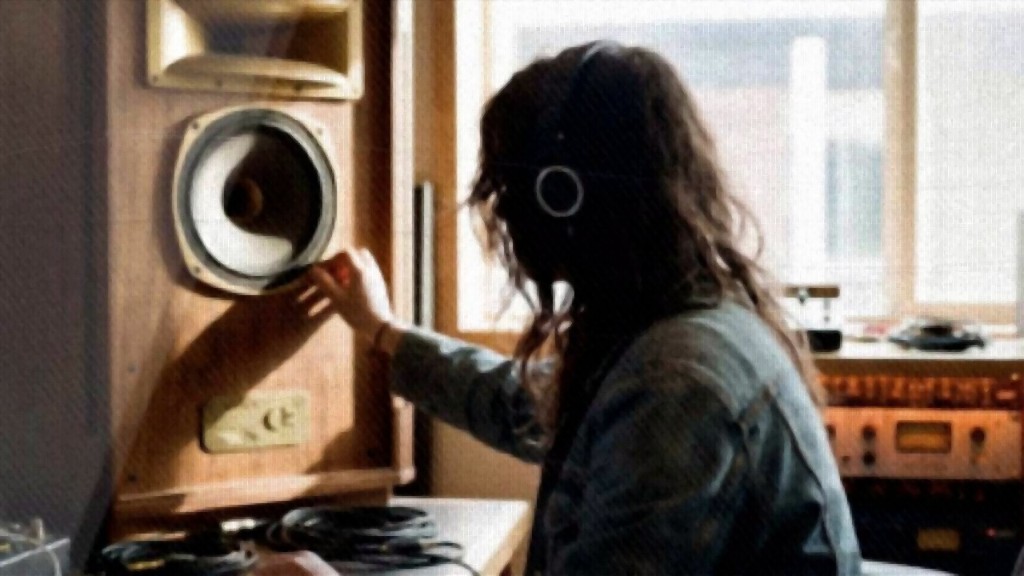
The technocratic ambition to replicate sonic reality has been the hallmark of high-fidelity audio for decades: systems that aim to erase the line between recording and live experience, elevating casual listening to an encounter where technical precision and emotion converge. However, the boundary between studio monitoring and high-end home playback is not so straightforward: in the studio, the priority is honest revelation of flaws and nuances, maintaining control over the artistic result; at home, we often seek musicality that does not exhaust, but rather invites prolonged listening. The recent editorial discussion on why high-end audio transforms the act of listening compels us to rethink how professional technologies and approaches (monitors, faithful reproduction, spatial audio) interact with the desires of the home listener. Beyond the hype, what actually transforms the experience, and where do the limits and misconceptions reside?
Neurobiology and Perception: Listening as an Embodied Phenomenon
Recent technical and editorial sources place the origin of this transformation in the very substrate of experience: systems capable of realistically reproducing dynamics, rhythm, and timbral textures—close, in short, to the sound levels and gestures of a live performance—create the conditions for a deeper emotional connection[1][2]. The underlying argument: the human brain instinctively and reflexively responds to musicality, especially to tempo, dynamic range, and timbral palette, dimensions present both during recording and home listening. The sensation of immediacy and the transition from mere sonic information to tangible bodily impact is recognized as the true high-end threshold. We would then not depend solely on static fidelity, but on the complete activation of the listener—physical, sensory, and emotional[2].
Recreating the Studio at Home? Professional Precision vs. Emotional Experience
It is often simplistically assumed that the ultimate goal of a home system should be to “fool” the ear, making us believe we are attending a live performance. This rhetoric, persistent in some marketing and audiophile discussions, is nuanced by independent sources: the value of a high-fidelity chain lies less in scenic illusionism than in its capacity to reveal emotional and intentional layers within a recording[2][4]. At the frontier between studio and living room, the dialogue becomes one of context and degree: nearfield studio monitors strive to reveal, unadorned, vocal and textural detail with an exhaustiveness sometimes incompatible with long home sessions; well-implemented high fidelity, meanwhile, aims for a natural articulation that preserves critical information about voices and instruments without causing fatigue or psychological distortion. The underlying question is less "how faithful is my gear to the studio recording?" and more "what does my system reveal about artistic intent and its effect on my perception?"
Textural, Dynamic, and Vocal Presence: Criteria for Transformation
The key elements in the equation of transformative listening—beyond total harmonic distortion figures or frequency response—are the simultaneity of microdynamics (impacts, transients, vocal breathing) and macrodynamics (orchestral swells and fades, sudden level changes), as well as the restitution of complex timbres. For listeners focused on vocals, articulation is a touchstone: a truly transformative system allows the voice to inhabit the room, conveying both the studio’s physical energy and the naturalness of a close conversation[1][8]. It is significant that press and community alike insist emotional impact emerges when instrumental separation and soundstage serve intelligibility, dimensionality, and overall realism, not merely analytic detail. Thus, the boundary between the controlled studio space and the home becomes subjective—the decisive factor being the system’s ability to enable long listening, prevent fatigue, and provide emotive presence[2][8].
Emerging Cultural Movements: The Act of How We Listen
In parallel with technological development, a recent cultural movement privileges how—not just with what—we listen. Dedicated listening room experiences turn high-end audio into a near-ritual act that seeks to engage both body and mind, placing music at the center of conscious attention[4][5]. This trend responds to technological saturation and calls for a return to the primal gesture of being affected by sound: the listening room is no longer merely a technical environment, but a space where music is no longer background and becomes an event. In this flow, the distinction between professional tool and domestic experience blurs, as the goal is not to replicate a recording or soften reality, but to foster an experience capable of transporting, moving, and transforming one’s mood.
Measurement, Subjectivity, and the Limits of Technical Comparison
Consulted sources rightly warn: technical measurements, though indispensable for characterizing a system’s capabilities (resolution, distortion, dynamic range), cannot serve as the sole criterion for validating the transformative impact of high-end audio[2][4]. The subjective reality of experience—how the body perceives rhythm, texture, or spatiality—defies metric reductionism. In practice, technical data should be understood as diagnostic tools, not absolute verdicts: transformative difference arises when the user stops analyzing the source and allows the music, through their system, to deliver the intention and emotion of the work. This does not negate the value of precision, but calls for listening that combines control with immersion.
Practical Consequences and Pitfalls in Decision-Making
The informed reader, faced with the choice of a high-level system, should distinguish between three levels of information: (1) verifiable data about resolution, dynamics, and timbre provided by technical sources and specialist media[1][2][8]; (2) marketing or community claims about "revealing" details or promises of a “live-like” experience, which need to be nuanced to avoid chasing the unattainable; (3) subjective consequences that can only be verified through personal experience, depending on both the original recording context and system-room synergy. A nuanced understanding of these layers helps avoid the trap of dogmatism (“everything professional is better”) or audiophile mysticism (“every difference is magical”). The real boundary in everyday listening lies where technology gives way to emotion, without demanding a sacrifice of naturalness or enjoyment from the listener.
Conclusion: Rethinking the Boundary Between Studio and Living Room
Why High-End Audio Transforms Listening opens a debate that transcends both the narrative of technical perfection and subjective nostalgia: it is rather about understanding how a high-fidelity system, built without dogma but with care for vocal articulation, realistic dynamics, and non-fatiguing sound, can be a natural extension of artistic intent, allowing us at home to experience a resonance we once suspected only in the studio or concert hall. Ultimately, the boundary between professional and hi-fi does not dissolve, but becomes a fertile ground where precision and pleasure interact—and the art of listening is recognized as an active process of transformation and discovery.