
News

Yamaha unveils RX300A and RX500A AV receivers with Dolby Atmos for home cinema

Yamaha launches two new AV receivers, the RX300A and RX500A, designed to bring Dolby Atmos surround sound and advanced HDMI 2.1 features to entry-level and mid-range home cinema systems. Borrowing engineering from higher-end models, these receivers aim to improve stability and clarity in everyday listening.

  • sound-and-vision
  • home-cinema
  • product-launch
  • yamaha-rx300a-and-rx500a-av-receivers
  • yamaha
  • rx300a
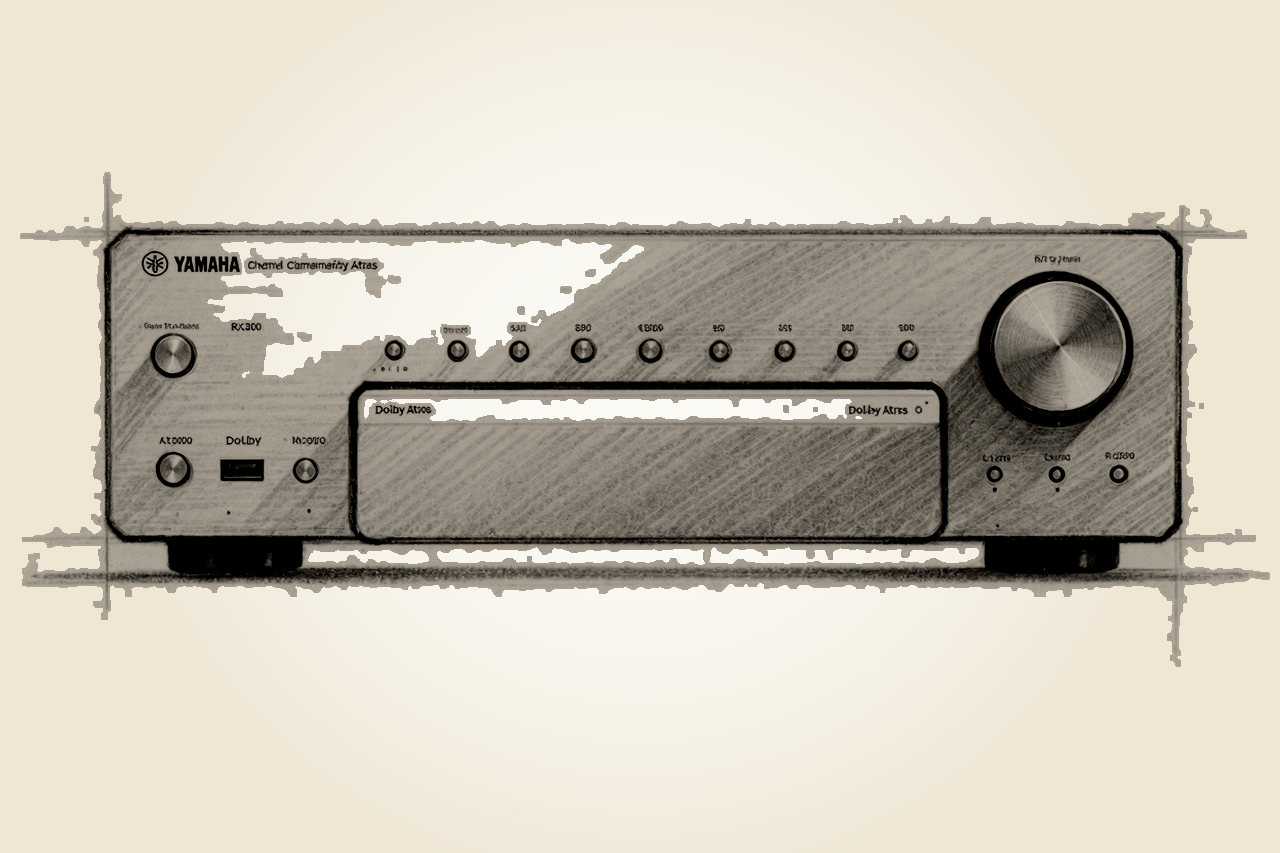
Yamaha RX300A and RX500A AV receivers with Dolby Atmos support for home cinema

Modernising entry-level and midrange home cinema

The AV receiver segment is undergoing a clear transition: technologies like Dolby Atmos and HDMI 2.1—once exclusive to flagship ranges—are now minimum expectations for anyone looking to create a realistic home cinema setup in 2024. The new Yamaha RX300A and RX500A are designed precisely to address this underserved middle ground: users who need access to immersive formats and connections ready for current consoles and displays, but are not yet ready to commit to the complexity (or cost) of a high-end room or dedicated processor.

What do the Yamaha RX300A and RX500A offer?

Yamaha has introduced two new AV receiver models: RX300A and RX500A. The brand positions them as bridges between the world of smart soundbars and dedicated multichannel experiences. Their proposition: deliver essentials like native Dolby Atmos decoding, full HDMI 2.1 connectivity—including 4K/120Hz passthrough and gamer-focused features—but with a simpler, more affordable architecture than the premium RX-A or RX-V lines traditionally associated with Yamaha.

Both models use the classic compact AV receiver architecture: multiple inputs for audiovisual sources, HDMI eARC output for straightforward TV connectivity, and built-in amplification sufficient for small 5.1 or 5.1.2 systems. Their technical differences seem geared towards the quantity of inputs and outputs and the nominal power per channel, but they are not presented as radical advances in sound engineering over previous Yamaha references. Sources consulted agree that Dolby Atmos compatibility is implemented at the decoding level, with the final Atmos effect depending on proper speaker placement and calibration by the user.

Who are these models for: target users and real room logic

It is no secret: most people considering a move from a soundbar to a traditional multichannel setup encounter multiple logistical barriers (space, cabling, installation complexity) and technical expectations. Yamaha targets these users, as well as those looking for the backbone of a basic 5.1/5.1.2 system that is easy to automate but still allows for future expansion—whether with next-gen consoles, AV streamers, or services that incorporate Atmos metadata as standard—without sacrificing compatibility or stability.

Thus, the RX300A and RX500A are positioned as starting platforms for realistic domestic spaces: living rooms, multipurpose rooms, and environments where easy integration and reliable HDMI/eARC are more valuable than the ambition of 11-channel systems. The use of familiar model designations and technical inheritance from higher models (such as the Anti Resonance Technology wedge) reinforces this approach: these receivers are designed to work coherently in daily use, not just impress with numbers.

Where they make a difference: specifications, engineering, and generational advancement

The leap from soundbars to basic AV receivers is typically tested on three fronts: support for advanced formats (Atmos, future DTS:X), up-to-date video passthrough (4K/120Hz, ALLM, VRR), and physical signal management (HDMI, eARC, CEC control). Yamaha stresses that its RX300A/RX500A meet all these criteria, highlighting HDMI 2.1—vital for current TVs and consoles—and native Dolby Atmos decoding. This means users can install, within amplification and speaker placement limits, a system that upgrades the soundbar experience to traditional home cinema without losing format support or connectivity.

A notable detail, rarely seen in the entry-level segment, is the adoption of engineering solutions like the Anti Resonance Technology wedge, inspired by Yamaha's higher models. This structural wedge is intended to dissipate internal vibrations and prevent subtle details from being masked—especially at high volume or during long sessions. The result? If the system is properly configured, it reduces the risk of distortion or listening fatigue typically associated with cheap speakers or poorly supported chassis, although the real effect will only be noticeable when combined with quality speakers and a thoughtfully planned installation.

HDMI, Atmos compatibility and limitations: nuances to understand

A critical warning: advertised Dolby Atmos or HDMI 2.1 compatibility does not guarantee a flawless experience. Moving up from a soundbar—where processing is usually integrated and closed—to an AVR of this kind introduces complex dependencies: the Atmos signal must originate from the source (streamer, console, Blu-ray, or TV app), be processed losslessly, and distributed correctly through the speaker matrix defined in the room. If speaker placement does not follow Atmos guidelines (e.g., overhead channels too close to the listening area or lacking real vertical separation), the surround effect will be partial or even disappointing. Likewise, HDMI 2.1 functionality requires certified cables and displays compatible with all advanced features—ALLM, eARC, VRR—and proper calibration; this is not automatic.

In short: the RX300A and RX500A lay a solid foundation, but require real room planning and proper configuration. A common mistake is to overestimate what electronics can achieve when speaker topology is not up to standard. Yamaha offers optimisation tools and guided setup paths, but fine calibration and room design remain the domain of installers or advanced users.

Do they solve the leap from soundbar to real home cinema?

The key is understanding the value of an AVR versus an advanced soundbar: freedom to choose speakers and placement, future-proofing for formats and sources, and more granular signal processing. The RX300A and RX500A provide that degree of flexibility, but the transition requires greater involvement: it is no longer just unboxing and plugging in, but considering cable routes, speaker phase and timbre, and gain adjustments. On the plus side, they avoid typical bottlenecks of closed systems that can't properly process Atmos metadata and modern HDMI signals.

Users willing to build a system with long-term consistency—in connectivity and daily reliability—will find compelling reasons here. Provided they understand that the magic is not just in the electronics alone, but in the system as a whole: room, layout, and calibration.

Risks and cautions: promises, expectations, and real-world execution

As with any generational upgrade and entry-level product, two temptations await those considering the RX300A or RX500A: taking catalogue compatibility claims as a guarantee of experience, and underestimating the physical and technical barriers to a proper Dolby Atmos setup. No receiver of this kind will compensate for poor speaker placement, faulty cabling, or lack of minimum acoustic planning. Power ratings usually reflect laboratory conditions or data from the manufacturer itself; real-world performance will depend on many additional factors.

HDMI 2.1 support, critical for gaming and smooth video with new consoles and players, depends on the entire chain: certified cables, updated displays, and sources capable of delivering a native signal without conversion or truncation. It is advisable to check manuals and compatibility charts for each device before making a complete commitment.

Bottom line: system logic, not miracle promises

The Yamaha RX300A and RX500A represent the logical evolution of basic home cinema: they offer a solid foundation for those seeking to move from a soundbar to a serious multichannel system, with access to Dolby Atmos and modern HDMI connectivity. Their real value lies in how they are integrated into a thoughtfully designed system—source, processor, speakers, room, and calibration—not in individual power or compatibility figures. The qualitative leap is real, but depends on setup and realistic expectations: these components are links in the chain, not a miracle in themselves.

Contact

Contact LineaSonora

For distribution, brand representation, integration projects or editorial enquiries.

[email protected]