

Chord Alto: Where a 50-Watt Studio Amplifier Fits in a Home Hi-Fi System
A source-backed analysis of the Chord Alto’s 50 W speaker output, four headphone connections, ULTIMA topology and the evidence gap between studio specifications and home listening claims.
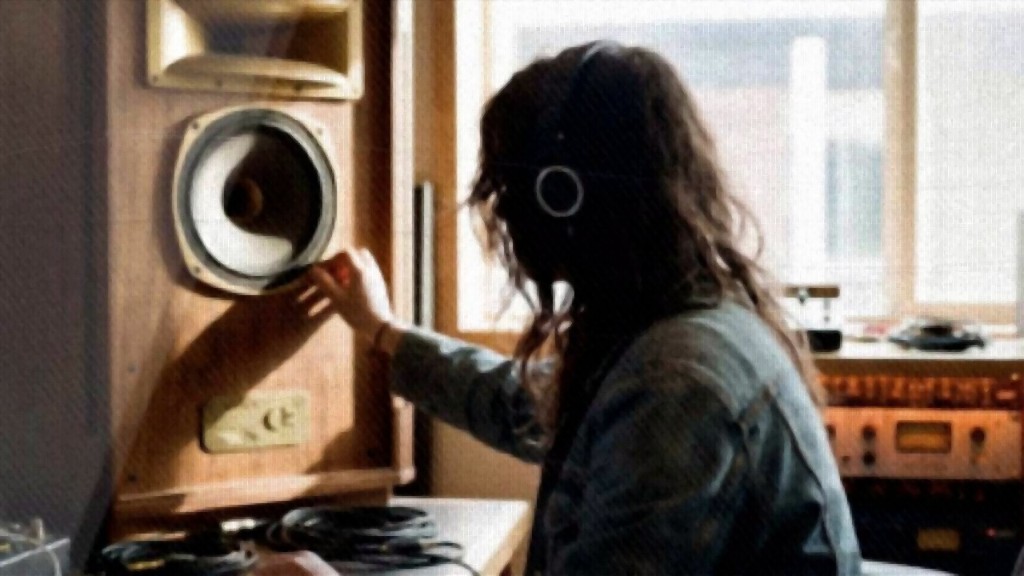
A studio amplifier offered for home systems
Evidence boundary: Chord documents 50 W into 4 ohms, four headphone outputs, XLR and RCA inputs, and ULTIMA error-correction topology. Darko supplies independent review context; LineaSonora did not audition or measure the Alto.[1][2]
The distinction — so debated and often diffuse — between professional studio and domestic listening returns to the fore with the arrival of the Chord Alto, a headphone amplifier defined from its debut as a 'studio' proposal for the Hi-Fi environment. The manufacturer presents it explicitly as a product capable of offering monitoring attributes and, in doing so, invites reconsideration of the boundary. Can an artefact born under professional production precepts — where neutrality, precision, and mix translatability are the measure — become a reliable companion for high-end musical listening at home?
Cultural frame: what does 'studio sound' mean now?
Historically, pressure for neutrality and accuracy has motivated both monitor manufacturers and electronics aimed at the studio. 'Studio sound' — ideally without additives, without colouration, with controlled dynamic response and crisp vocal articulation — is conceived as a tool. In the domestic chain, the same adjectives can be perceived as allies of detail… or, conversely, as sources of fatigue and 'coldness', especially on recordings whose production already tends toward hyper-detail. Here the rhetoric of a 'studio' amplifier invites uncomfortable questions: what did the artist and engineer intend? What is the device's responsibility in translating intentions to the domestic room?
The Chord Alto under scrutiny: promises, uncertainties, and demands for precision
Initial documentation and coverage present the Chord Alto as a solution transferring circuits and philosophy from the professional world (monitoring, mix/mastering) to domestic headphone enjoyment. Recognisable arguments are emphasised: balanced topology, handling of difficult loads, focus on objective linearity, and rejection of 'gratuitous colouration'. However, these assertions, though coherent within technical discourse, must be distinguished between what is verifiable (circuit design, internal architecture, connection possibilities) and what is aspirational ('studio sound' as synonym for musical superiority or universality).
To date, there is no accessible public evidence indicating the Chord Alto has been adopted as a real standard in professional studios nor that it is used in critical mastering environments. This does not diminish its engineering value: it rather raises an ontological doubt — when the 'pro' promise enters the living room, who guarantees resulting listening reflects both original intentions and the emotional experience sought at home?
Consequences in listening: voices, clarity, and fatigue
Manufacturer specifications can document power, distortion and connectivity; they cannot establish vocal presence, soundstage continuity or fatigue in a particular listener’s system. Because LineaSonora did not conduct a listening test, this article does not claim those outcomes for Alto. The useful question is whether its documented topology, power and connections fit the intended studio or home application.[1][2]
The high-fidelity user accustomed to warm-tinted equipment — valve designs, vintage layouts, or lightly feedbacked transistors — may discover the Alto's technical transparency translates into more incisive listening, sensitive to recording and production: dense mixes, unpolished voices, or spatial conflicts may become more evident, without embellishment. The role of voice — touchstone for measuring naturalness and fatigue — will be decisive in deciding whether the amplifier approximates studio experience or, conversely, introduces meticulous distance many seek to avoid in the living room.
Interfaces, systems, and real context
A headphone amplifier does not live in isolation: it depends radically on the rest of the system — digital or analogue source, DAC quality, headphone type, and ultimately the recording/production chain of the reproduced music. Temptation to judge 'the professional' as better, or to prioritise absolute transparency, must be modulated with recording reality, average mastering, and domestic listening conditions (levels, acoustics, session length). Today, many neutrality-oriented systems are used with contemporary recordings and remasters sometimes overly compressed or aggressive: the studio-grade promise can become, without nuance, added difficulty for sustained pleasure.
Additionally, integrating the Chord Alto in domestic systems poses practical challenges beyond technical discourse: gain needs, compatibility with low- or high-impedance headphones, and interaction with DACs and streamers. Without clear reference on absolute compatibility, it is essential to consider the equipment into which it is inserted and, above all, the type of music, dynamics, and production privileged in personal sessions.
Spatial audio and production intentions
The rise of immersive audio — especially in new releases mastered in Dolby Atmos — redoubles relevance of tools allowing separation, articulation, and dimensioning of voices and instrumental planes without losing roughness or cohesion. If the Alto preserves intention generated in multiplane mixing environments, it could be valuable for those seeking faithful reproduction of modern spatial recordings. Nevertheless, here again technical transparency can cut both ways, exposing both master virtue and its limitations.
Closing: the question remains open
The Chord Alto embodies a tension that is not new but urgent for the informed enthusiast: how to balance analytical precision inherited from the studio with domestic listening that is simultaneously honest and gratifying? If anything in the constant dialogue between production and reproduction teaches, it is the impossibility of proclaiming a definitive solution. The Alto, with its studio ideology and technical promises, invites exploration of that intermediate space: one where pleasure does not renounce truth, but neither sacrifices musical experience in pursuit of extreme neutrality.
The border between studio and living room will hardly be abolished by a single device. Rather, the Alto underlines how valuable it is to ask not so much how "pro" the electronics are, but for which music, for which vocal register, for which recording each system piece manifests its true potential. Is the domestic listener willing to embrace studio rawness in search of detail? That, perhaps, is the final challenge amplifiers such as the Alto invite us to consider.