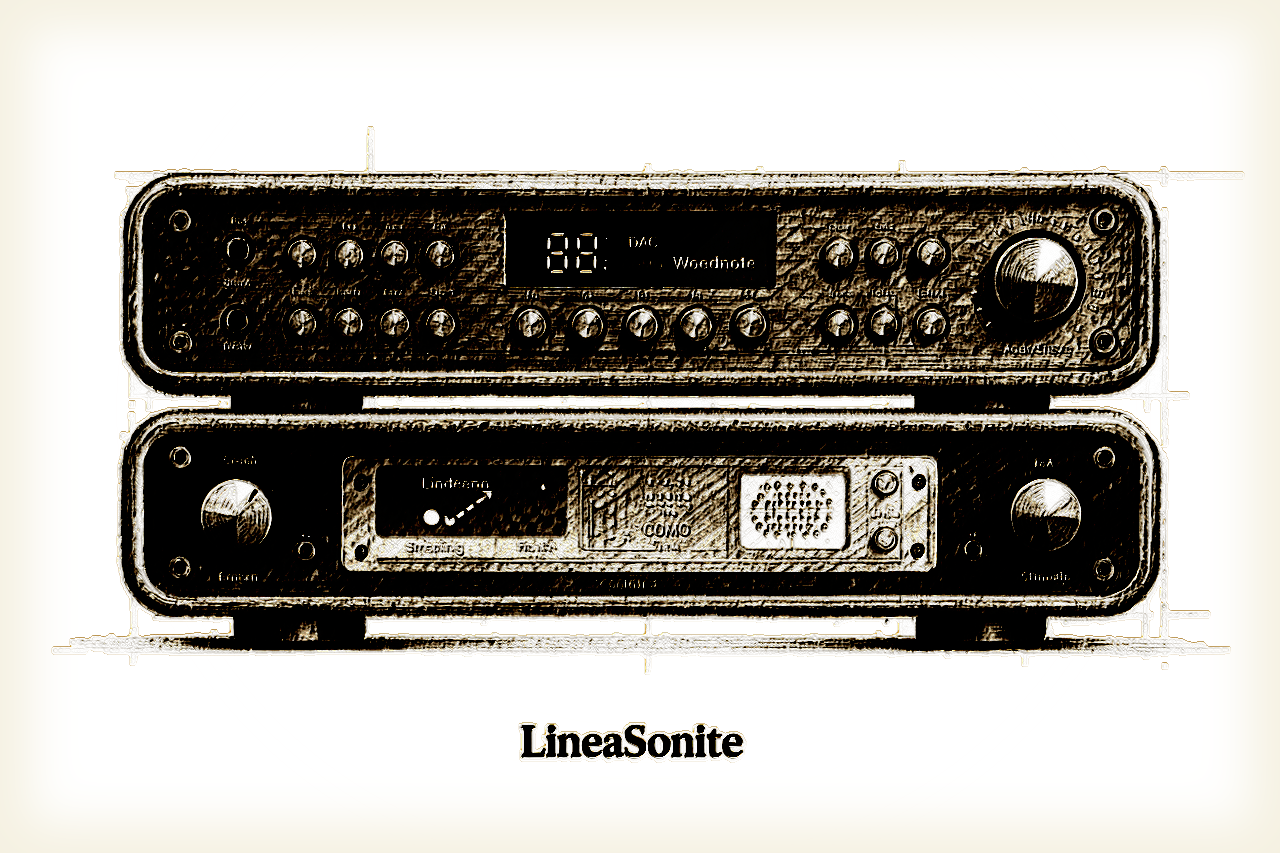

Lindemann Woodnote COMBO: digital integration and streaming in a versatile DAC amplifier
The Lindemann Woodnote COMBO proposes an all-in-one solution that merges advanced streaming, a high-spec DAC and integrated amplification in a format crafted for modern users, firmly positioning itself at the intersection of digital, DSD volume control, and the system flexibility demanded by today's hi-fi landscape.
Redefining the digital system: introducing the Woodnote COMBO
In a hi-fi landscape increasingly defined by digital integration and adaptability to streaming services, the recurring question is how to unite conversion quality, network versatility, and control over the signal without fragmenting the experience or relying on multiple devices. The Lindemann Woodnote COMBO steps forward as a response to these demands, adopting a design that fuses DAC, streamer, and integrated amplifier—presumably Class D—into a single chassis. It places special emphasis on advanced DSD signal handling and digital volume control, without compromising compatibility or ease of installation.
Digital architecture for streaming and convergence
The Woodnote COMBO is strategically positioned at the intersection of categories currently in flux: having just a good DAC or a capable amplification stage no longer suffices; users now expect seamless digital workflows, native decoding of demanding formats, and control from streaming platforms. The device incorporates an integrated streamer that—according to available information—can handle local libraries and network services, aligning with trends that prioritize the digital experience over the traditional succession of physical sources.
Beyond the promise of convenience, the standout feature seems to be digital volume management directly in DSD. While many streamers convert DSD to PCM to maintain digital volume control, Lindemann's approach—according to the original review—aims to preserve DSD signal purity by avoiding pre-conversion. A note of caution is warranted here: while there are technical implementations that process volume in the DSD domain via oversampling or direct bitstream manipulation, the real impact on sound, signal integrity, and the absence of artifacts critically depends on the specifics of the internal chain's implementation.
Volume control in DSD: potential and uncertainty
Digital volume management of DSD files in streamers and DACs has long been a contentious area. Some manufacturers prefer purist solutions—avoiding any digital control and shifting the task to the analog domain—but this can prove impractical in all-in-one systems designed for living rooms, desks, or minimalist setups. Lindemann positions the Woodnote COMBO as capable of adjusting DSD signal volume while maintaining 'native' playback, without redirecting conversion to PCM; however, the available external review does not detail the internal architecture, the algorithms used, nor is there independent evidence showing an absence of distortion or loss of resolution. This lack of data requires caution and transparency for demanding prospective buyers.
From a practical standpoint, the key for users is to verify two factors: true compatibility with native DSD files (especially multichannel or high sample rate) and the smoothness, linearity, and absence of audible artifacts during volume adjustments. No independent measurement results or extensive algorithm analyses have been published. As with any feature touted as distinctive, the editorial advice is to contrast the manufacturer's claims with technical publications or documented listening tests.
System unification: DAC, streamer, and amplifier as an ecosystem
The trend toward integrated hi-fi systems is a functional reality: reducing the number of boxes, cables, and compatibility weak points, especially in setups where network connectivity and ease of use take precedence over the traditional flexibility of component-based hi-fi. With its configuration, the Woodnote COMBO aims to eliminate the need for multiple digital sources and intermediate stages, promising 'plug-and-play' integration with popular streaming services and efficient management of local files.
While the feature set appears broad, it is important to remember that the universality of any 'all-in-one' depends less on its specifications than on the robustness of its software support, its ability to update for new services, and the stability of the home network. User experience in a system based on streaming and networking will hinge on app quality, protocol implementation, latency, and the ease with which large libraries are managed. These are factors to investigate before making significant purchasing decisions.
Caution with claims of technical uniqueness
A serious review of any product claiming 'unique' solutions in digital processing—especially regarding DSD conversion or digital volume—requires asking which other brands have addressed this challenge and with what results. Digital volume control in native DSD is feasible, but not necessarily exclusive or free from possible degradation if engineering is not robust. The lack of public evidence for concrete superiority of the Lindemann solution in objective measurements or against reference alternatives calls for healthy skepticism: the priority is to understand how the device interacts with the existing chain (Roon, NAS, local servers, remote libraries) and how resilient its digital ecosystem is to transitions and updates in the software that rules modern streaming.
Network experience, adaptation to firmware updates, metadata management, and compatibility with PCM/DSD streams from various sources are customary pain points in any advanced streamer. Each user should consider their specific situation: do I depend on a particular streaming provider? Do I want to play local DSD files, or will most management be via Qobuz/Tidal? These questions will define whether the Woodnote COMBO delivers maximum value or if a more open or modular ecosystem would be preferable.
Open questions and limits of the proposition
Beyond the appeal of a machine that combines DAC, streamer, and power stage—eventually Class D, as suggested—the challenges of integration should not be underestimated. For example: are future codec updates, loudness normalization, multiroom integration, or synergistic connectivity with non-Lindemann devices guaranteed? Is volume control in DSD truly operationally distinct from rivals in the same price/performance bracket?
The lack of clear details regarding independent measurements or internal engineering breakdown leaves the door open for informative skepticism. A robust all-in-one solution must demonstrate solidity both in digital architecture and responsiveness to the evolving demands of users used to mutable software and network services. In the absence of verifiable information on these points, the editorial advice remains: interpret 'unique' features critically, prioritizing real integration capacity within one's own chain and the system’s resilience to the user's adopted digital ecosystem.
Conclusion: realistic integration and operational skepticism
The Lindemann Woodnote COMBO presents itself as a plausible answer to the demand for simplicity and integration in digital hi-fi playback, uniting the core components of a complete system—streaming, conversion, and amplification—within a single chassis. Its appeal lies in minimizing reliance on multiple devices and cables and in promising digital volume control in DSD that, in theory, preserves signal purity. However, the lack of fully verified specifications, comprehensive comparative analysis, and openness about the internal architecture recommend prudence to demanding buyers and those seeking maximum compatibility and future-proofing. The most sensible approach: contextualize its real strengths, demand proof, and weigh ease of integration against the still undocumented truths of its technical ecosystem.