

Joni Mitchell’s Blue: What Rhino Documents in Its New LP and R2R Editions
Rhino’s 55th-anniversary campaign presents Blue as a numbered 180-gram LP and a limited 15 IPS reel-to-reel edition. The published specifications clarify provenance and compatibility; they do not establish a sonic hierarchy.

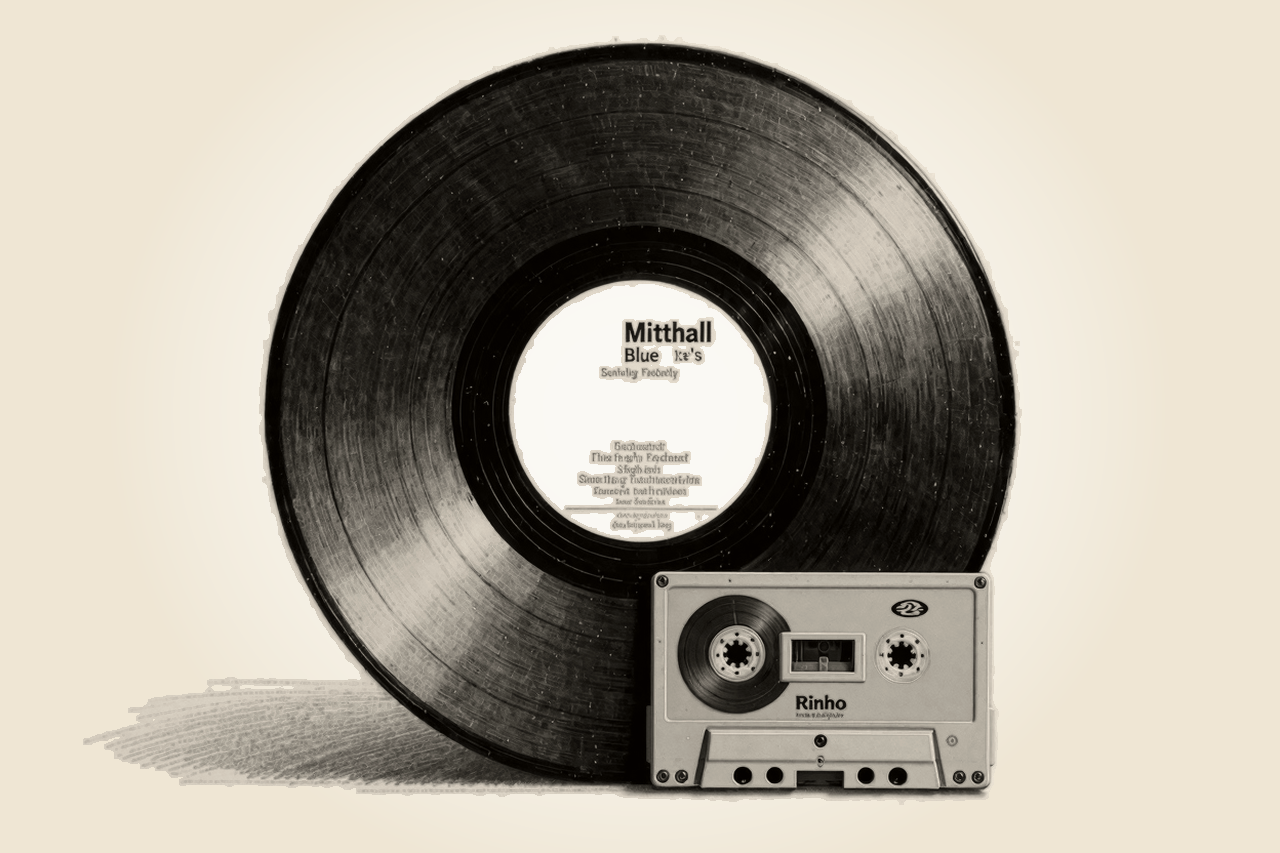
Joni Mitchell’s Blue, originally released in 1971, reaches its 55th anniversary with two physically distinct Rhino editions: a Rhino High Fidelity LP and a reel-to-reel, or R2R, tape release. [1][2]
The distinction matters more than the word “audiophile”. These are not interchangeable purchases. The LP is made for a turntable-based system; the R2R edition requires a reel-to-reel machine compatible with its stated tape format. Rhino’s information describes the editions’ manufacture and intended playback conditions, but it does not provide an independent comparison showing that either sounds better.
Two editions, two playback requirements
Rhino lists the LP as a Rhino High Fidelity release: a 180-gram record cut by Kevin Gray, pressed at Optimal, and limited to 5,500 numbered copies. [3][4][2]
The R2R edition has a different set of requirements. Its announced specification is 1/4-inch, half-track tape at 15 inches per second, with IEC equalisation, RTM LPR90 tape and a 10.5-inch metal reel. The declared run is 350 copies. [5][3]
For someone who already owns an appropriate reel-to-reel machine, those details are materially relevant. For someone with only a turntable, the tape is not a functional substitute for the LP. It is a specialised playback format with its own equipment dependency.
What Rhino documents about the LP
The useful part of the LP’s published specification is its stated production identity: Rhino presents it as sourced from the original analogue masters, credits Kevin Gray for the cut and names Optimal as the pressing plant. [3][4][2]
These details answer different questions. The source statement concerns declared provenance; the cutting credit identifies the engineer; the plant identifies where the record was pressed. The 180-gram figure describes the record’s weight, while the numbering describes the edition’s scarcity.
None of those points is, by itself, a guarantee of pressing quality. A heavier record, a numbered run and the name of a pressing plant do not certify planarity, centring, background quietness or consistency between individual commercial copies. Nor does 180-gram vinyl, on its own, establish anything about the source tape’s condition, the cutting decisions or the result in a particular playback system.
What the R2R description means—and what it does not
The R2R announcement describes real-time duplication from a “flat” copy of the original analogue master, using the tape stock, speed and format listed above. [5][3]
That is meaningful production information, but it needs careful reading. The buyer receives a duplicated consumer reel, not the unique studio master tape. “From a flat copy” describes Rhino’s stated route to the commercial edition; it does not document every tape generation, transfer decision, equalisation choice or other stage in the full production chain.
The available material therefore supports a narrower conclusion: Rhino has disclosed a specific duplication approach and a detailed consumer tape format. It does not establish equivalence with the original recording tape, nor does it provide a complete technical account of how the final commercial copies were made.
Phrases such as “master-quality listening experience”, “capturing the full dynamics” or being as close as possible to the original recording should remain attributed to the campaign. They are promotional promises, not independent measurements or the outcome of a documented listening comparison. [3]
Surface noise as a format argument
Rhino’s promotional language contrasts reel-to-reel with vinyl’s possible surface noise and groove wear. Tape playback does not involve a stylus tracing a record groove, so it does not share those particular mechanical conditions. That difference, however, is not a universal verdict on audible quality. [5][3]
A record can be affected by pressing variation, contamination, wear and the state of the playback chain. An R2R copy depends in turn on the supplied tape and on a compatible, maintained machine. The evidence available here includes no independent listening report, quality-control record or measurement for the commercial editions. Claims about background silence, dynamics, tonal balance, separation or superiority between formats should therefore remain unmade.
The practical question is simpler than the campaign rhetoric suggests: which format can be played properly in the system already at hand, and what part of its advertised production history is actually documented?
How to choose without turning the edition into dogma
The LP is the straightforward option for a listener with an existing turntable system who wants Rhino’s declared analogue-source provenance, Kevin Gray’s cutting credit, an Optimal pressing and a numbered edition. Those are useful facts of identification, not a forecast of how every copy will perform. [3][4][2]
The R2R edition is relevant only to buyers with suitable reel-to-reel playback equipment and an interest in a much smaller, specialised run. Its stated 350-copy limitation and tape specification are central to its identity. They do not make it the original studio master, and they do not prove a general sonic advantage over the LP. [5][3]
Before choosing, it helps to separate three questions: the appeal of the object, the equipment needed to play it and the sound benefit that has actually been demonstrated. The published specifications address the first two. The third remains open.
Limits of the available information
Rhino’s product information is the strongest source for the editions’ commercial identity, formats and declared production details, while also being promotional material. Specialist summaries offer useful corroboration but do not replace a full technical statement from the label or mastering team. [3][2][6]
The available sources also differ by one day on the release date: Rhino lists 10 July 2026, while a secondary account cites 11 July. July 2026 is the more defensible formulation unless current official availability information resolves the discrepancy. [3][2]
The responsible conclusion is modest. Rhino has defined two collectible editions of Blue with different physical formats, declared provenance and playback requirements. That information can guide a format choice. It cannot rank LP and R2R by sound quality, certify the quality of individual copies or complete the technical chain behind either release.